

The Smile of Her at Marylebone Theatre: A Fierce and Moving Journey of Self-Discovery
Located just a short walk from Baker Street Station, the intimate Marylebone Theatre has built a reputation for presenting thought-provoking productions with the polish of a larger West End venue while maintaining a close connection between performers and audience. Its latest offering, The Smile of Her, continues that tradition with a deeply personal and emotionally charged one-woman play written and performed by acclaimed actress Christine Lahti. Running for 90 minutes without an interval, the production brings audiences into the heart of a woman's lifelong struggle against expectations, stereotypes, and the pressure to always be "a good girl."

From the opening moments, The Smile of Her establishes itself as a work of remarkable honesty. Drawing from Lahti's own experiences, the play follows a woman from the suburbs of 1950s America through decades of social change, personal growth, and self-examination. Along the way, it explores themes of family mythology, misogyny, ambition, motherhood, and the compromises women are often expected to make in order to fit societal expectations. What emerges is not simply an autobiography, but a universal story about identity and the courage required to reclaim one's own voice.
One of the production's greatest strengths is its balance between humour and vulnerability. Despite tackling serious themes, the play avoids becoming overly heavy. Sharp observations and moments of wit are woven throughout the narrative, creating a sense of warmth that invites the audience in. Lahti has described the piece as both funny and furious, and that combination is evident in every scene. The humour provides relief from the emotional weight of the subject matter while simultaneously highlighting the absurdity of many of the expectations placed upon women.

As a solo performance, the success of the production rests almost entirely on Christine Lahti's shoulders, and it is easy to see why the role has been described as a tour de force. Holding an audience's attention for ninety minutes without the support of additional cast members is no easy task, yet the structure of the play allows Lahti to shift effortlessly between different periods of her life, different emotional states, and different versions of herself. The performance feels less like a conventional monologue and more like an intimate conversation, drawing the audience into memories that are at once highly personal and surprisingly relatable.
What makes The Smile of Her particularly compelling is its exploration of the seemingly simple act referenced in the title. The smile becomes a symbol of social expectation, politeness, compliance, and the pressure many women experience to appear agreeable regardless of how they truly feel. Throughout the play, that smile evolves from a protective mask into something that eventually begins to crack under the weight of lived experience. The result is a powerful examination of how identity can be shaped, suppressed, and ultimately reclaimed.

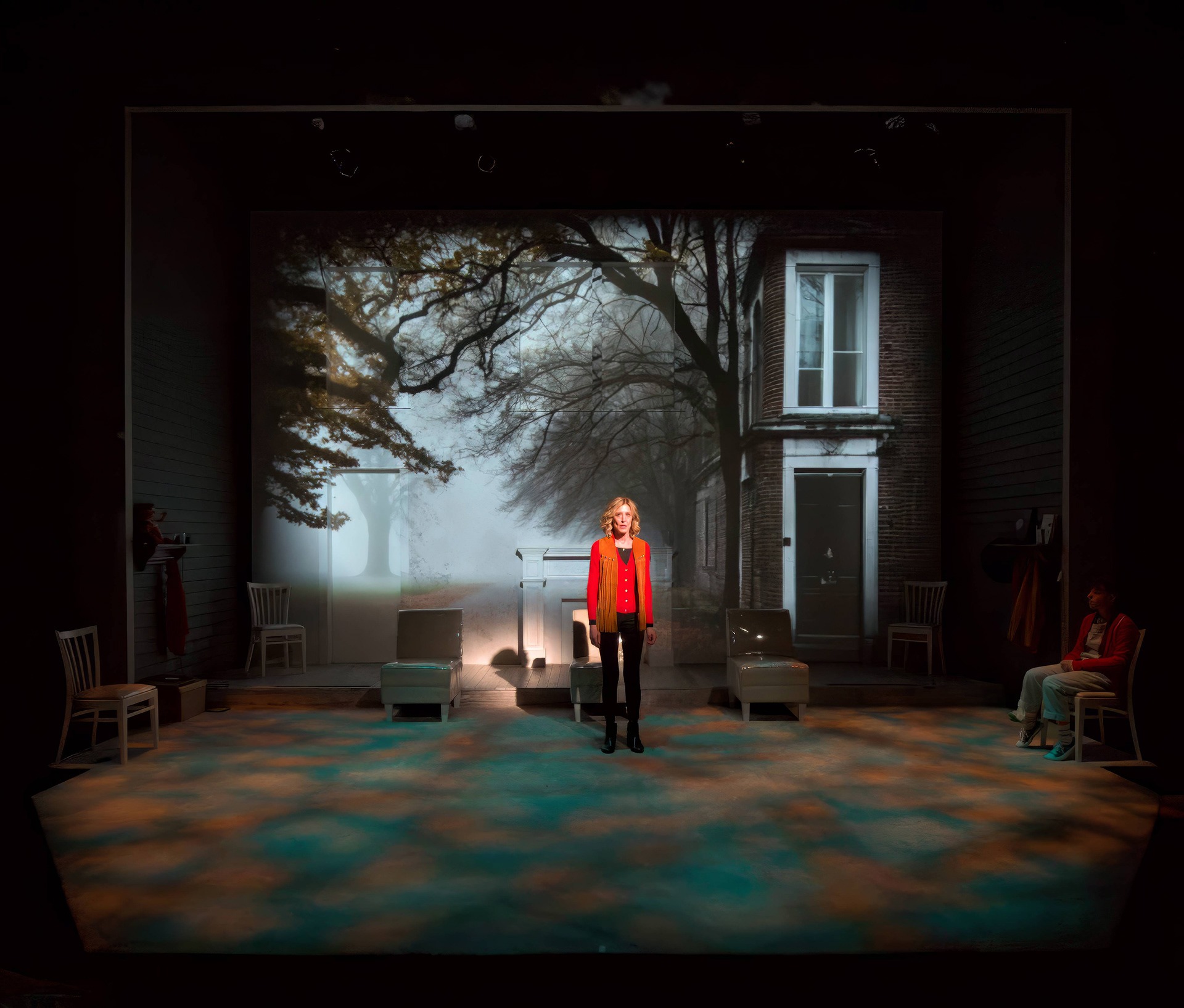
Director Mêlisa Annis approaches the material with restraint, allowing the story and performance to remain the focus. Rather than overwhelming the audience with elaborate staging, the production appears to rely on carefully considered design elements, lighting, sound, and projections to support the storytelling. This simplicity is likely to work in the play's favour, ensuring that every emotional revelation lands with maximum impact. The intimate setting of the Marylebone Theatre further enhances this effect, making the audience feel like active participants in the story rather than distant observers.
The themes explored in the play resonate strongly in today's cultural landscape. Although rooted in experiences that began in the 1950s, the questions it raises about gender expectations, personal ambition, family influence, and self-worth remain strikingly relevant. The play's examination of the tension between societal approval and personal authenticity feels particularly timely, giving the production a contemporary urgency despite its autobiographical origins.
It is worth noting that the production deals with challenging subject matter, including references to sexual assault, mental illness, suicide, domestic violence, and substance abuse. These topics are handled within the broader context of the protagonist's life story and contribute to the play's emotional depth. While some audience members may find portions of the material difficult, these themes also reinforce the production's commitment to honesty and authenticity.

