

JEEZUS! at New Diorama Theatre in London is an electrifying queer Latinx musical created by the theatre collective Alpaqa and written by Sergio Antonio Maggiolo and Guido García Lueches. Directed by Laura Killeen, the production reimagines the story of a young altar boy named Jesús as he prepares for his first communion in 1990s Peru, only to find himself grappling with unexpected desire, Catholic guilt and self-discovery in a world shaped by faith, politics and emotion. Through a blend of live music, sharp humour and stylised irreverence, JEEZUS! turns blasphemy into a celebration of queer identity and liberation.

The show launches with a burst of rhythm and colour as Jesús (played with magnetic energy by Maggiolo) strides onto a minimal stage in full altar attire, vibrant Latin beats already pulsing under his feet. That opening of sacred garb inside an unapologetically wicked soundtrack immediately signals this is a musical that trusts contrasts to make its point. A simple spotlight, the sway of a song, and you’re already inside both the joy and the conflict at the heart of his journey.
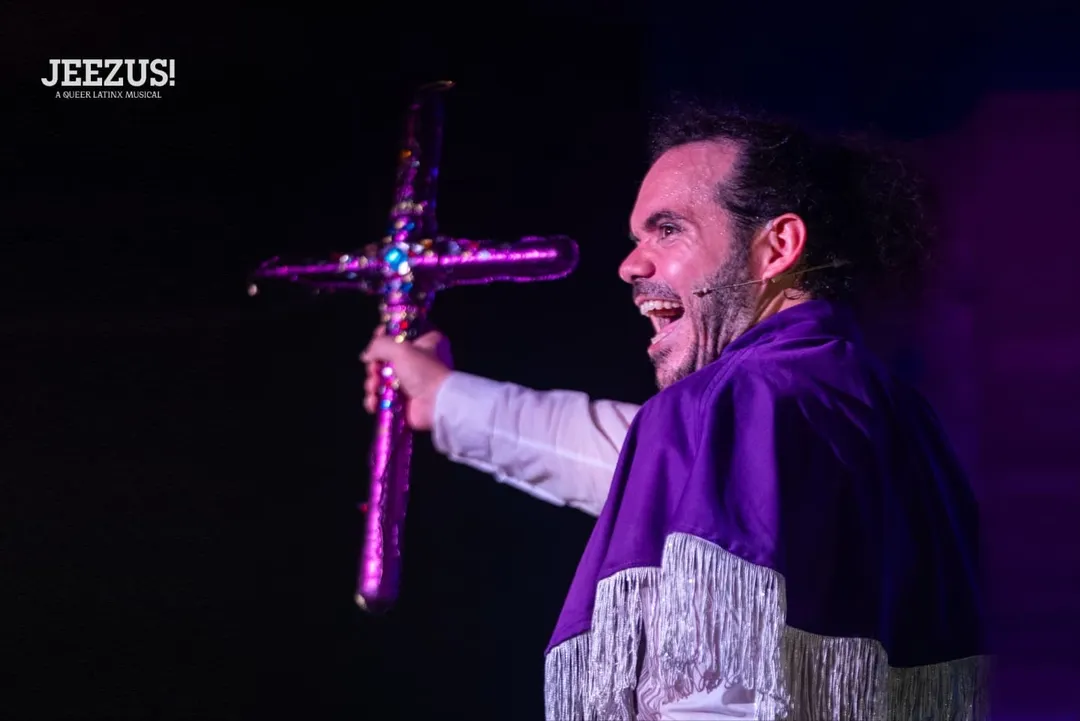
What JEEZUS! does best is use song and physicality to keep its emotional stakes alive. When Jesús confesses, playfully yet earnestly, “Falling for Jesus feels like a mortal sin… but damn, it feels good” even paraphrased the line lands because the live music and the performer’s expressive timing make you feel that tension between faith and attraction rather than just hear it. The score leans into Latin rhythms and pop sensibilities that pull the audience into the world with warmth and energy, not just spectacle.
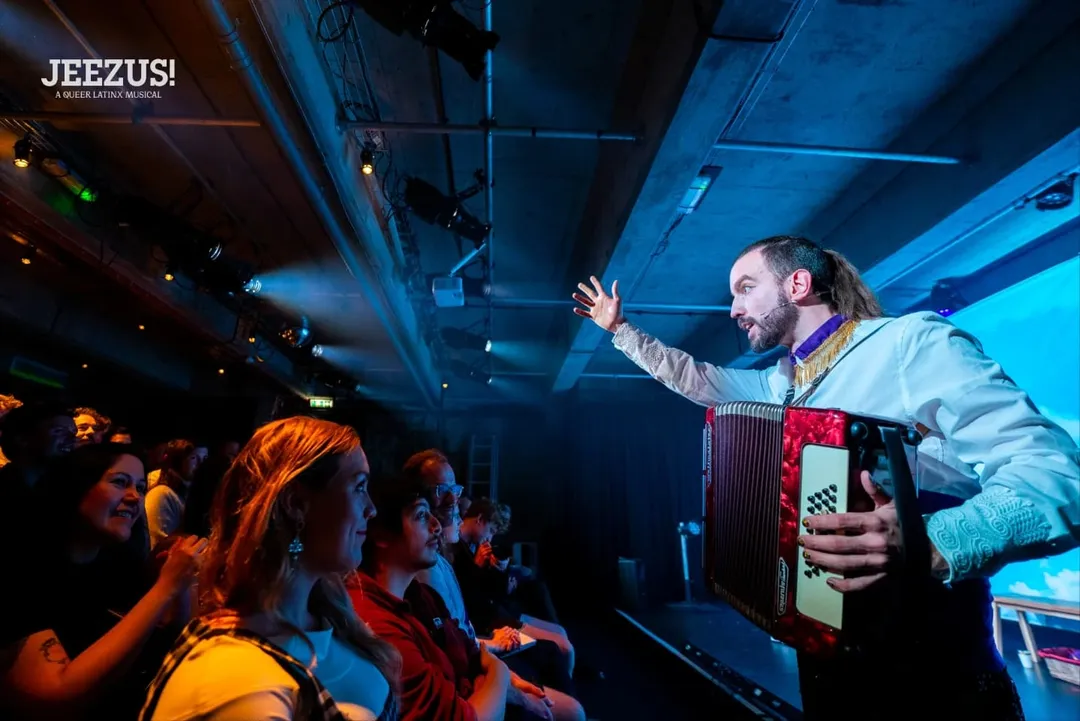
Guido García Lueches complements Maggiolo throughout, shifting between roles from Jesús’s stern military father to a flamboyant, otherworldly Jésus figure with fluid physical and vocal choices. These shifts create a vibrant, kinetic rhythm onstage: one moment you’re laughing at outrageous satire, the next you’re caught up in a heartfelt duet that reframes what love and devotion might mean beyond doctrine.

Design choices support these shifts without overwhelming them. Simple costume touches, like a glittering crown of thorns or embroidered Latin vestments, pop against a versatile set that lets movement and music take centre stage. Lighting punctuates emotional beats, a wash of warm gold for moments of connection, a stark contrast for scenes grappling with guilt and conflict, bringing texture without distraction.

JEEZUS! succeeds because it doesn’t just push buttons or shock for effect; it marries its outrage with genuine heart. Beneath the irreverence and laughter lies a story of identity, shame and the messy joy of breaking through boundaries, inviting everyone, whether rooted in tradition or breaking free from it, to grapple with questions of love, belief and what it means to be true to oneself.

