

Halloween at the Golden Hinde: Witch Bottles, Barber-Surgeons and the Gruesome Truth About Tudor Medicine
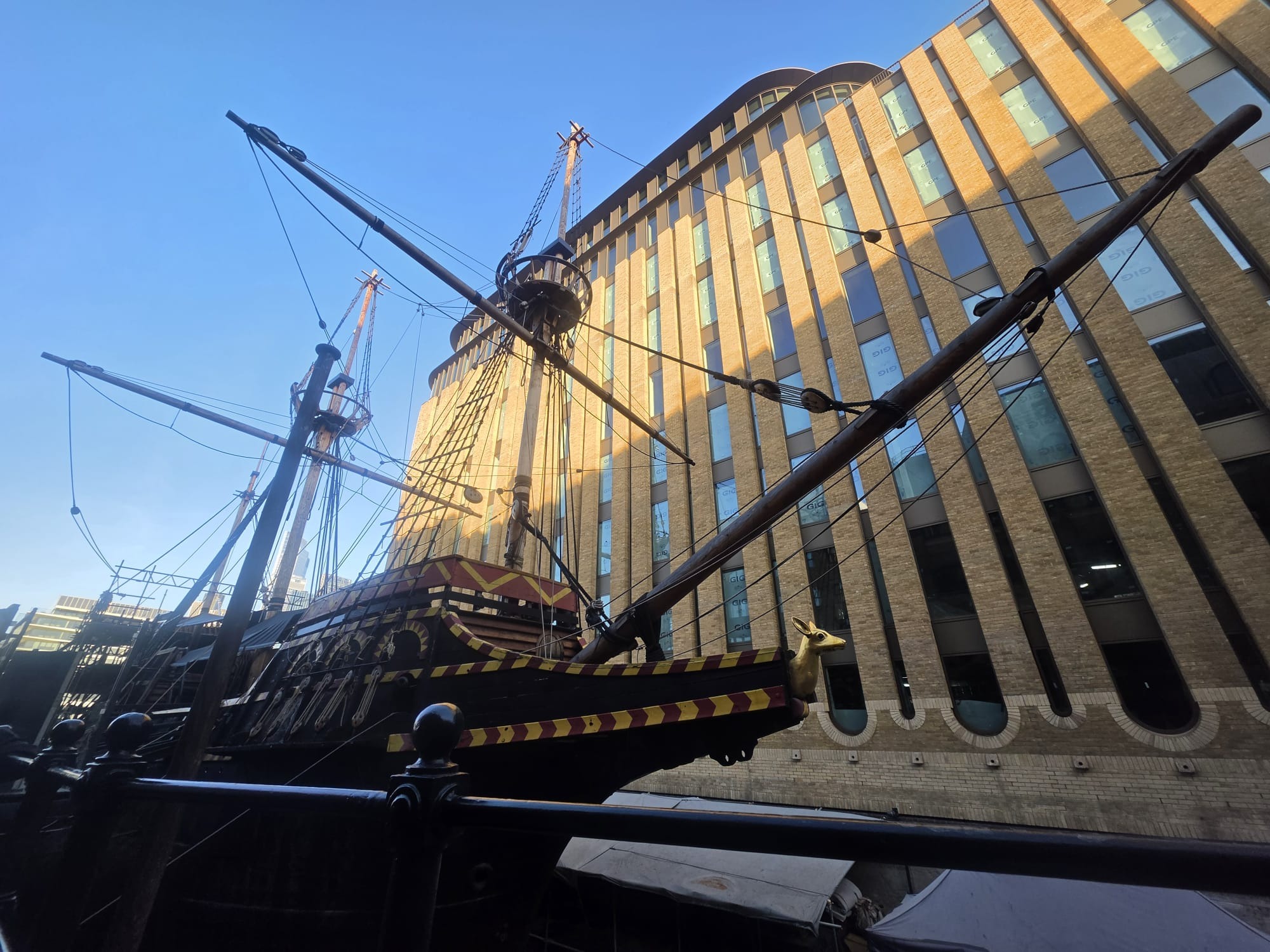
Halloween Aboard at the Golden Hinde is the kind of seasonal event that reminds you why the best way to hear a ghost story is inside a 16th-century sailing ship. Moored at St Mary Overie Dock in Southwark, the full-size replica of Sir Francis Drake’s galleon ran its Halloween programme from 24 October to 1 November, and it handled the occasion with real flair. Rather than dressing up a museum visit with a few plastic bats, the ship used its cramped timber interior to explore Tudor superstition, seafaring folklore and the decidedly unglamorous realities of medicine at sea. The half-hour sessions in the Great Cabin were followed by a tour of the decks, and the whole thing was funny, grisly and surprisingly educational. It suits families, but adults will enjoy it just as much.
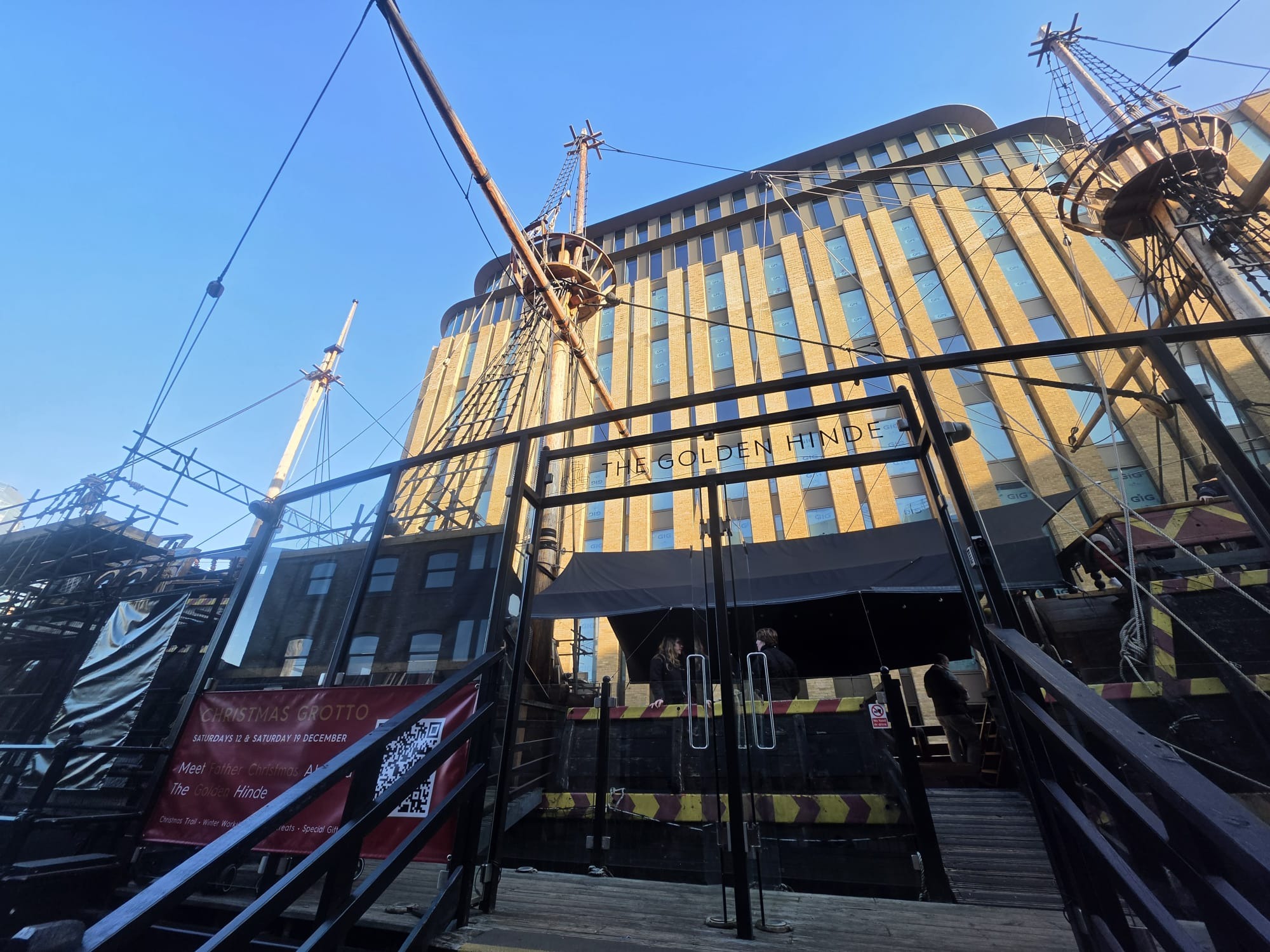
The session begins by setting the scene. Our guide took us back to Drake’s 1577 voyage, which lasted almost three years and crammed sailors in alongside livestock. Sitting in the low-ceilinged Great Cabin and picturing that, the supernatural fears and protective rituals of the age suddenly felt much less remote. These were people living in close quarters, far from home, at the mercy of weather, illness and the unknown, and a belief in witches and charms made a certain kind of sense. From the first few minutes, the guide had the room hooked.
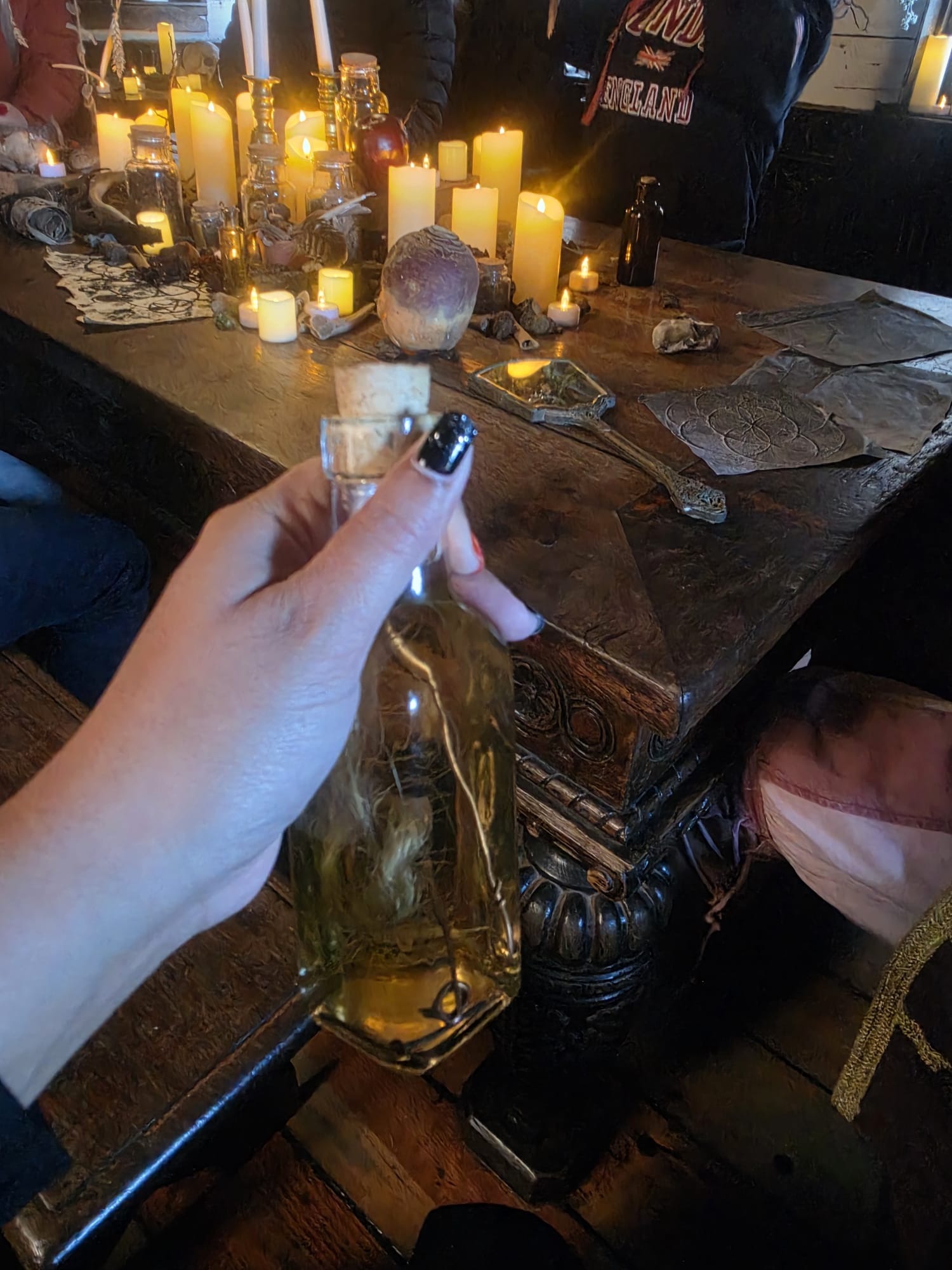
What works especially well is how tangible the history becomes. The talk covered the religious tensions of Tudor England and the protective marks that people carved into buildings, such as overlapping Vs and daisy wheels. Then came the witch bottles, which were filled with hair, nail clippings, pins and urine to ward off evil. The demonstration bottle, fortunately, held only apple juice, but handling it made the strange beliefs real in a way no caption could. We also heard about maritime superstitions involving bananas and eggshells, and passed around a hagstone, a stone with a natural hole said to protect its owner or reveal unseen spirits. The legends of Drake’s supposedly magical mirror and his famous drum took on extra atmosphere inside the ship, and at one point we tapped the surrounding timbers to recreate the drumbeat. The story of Stingy Jack, meanwhile, linked carved turnip lanterns to the pumpkins of today’s Halloween.
The programme became even more entertaining when it turned to Tudor medicine. The guide enlisted audience members to solve a series of grisly medical mysteries. A headache might first be treated with fragrant cloves or herbs, but the last resort was trepanning, drilling into the skull, and we were invited to consider whether such an operation, carried out without any knowledge of germs, might leave the patient worse off than before. A toothache brought out the dental pelican, an alarming-looking instrument for pulling teeth. The guide’s theatrical demonstrations and humour kept it engaging rather than merely unpleasant, and the children in the room were clearly thrilled.
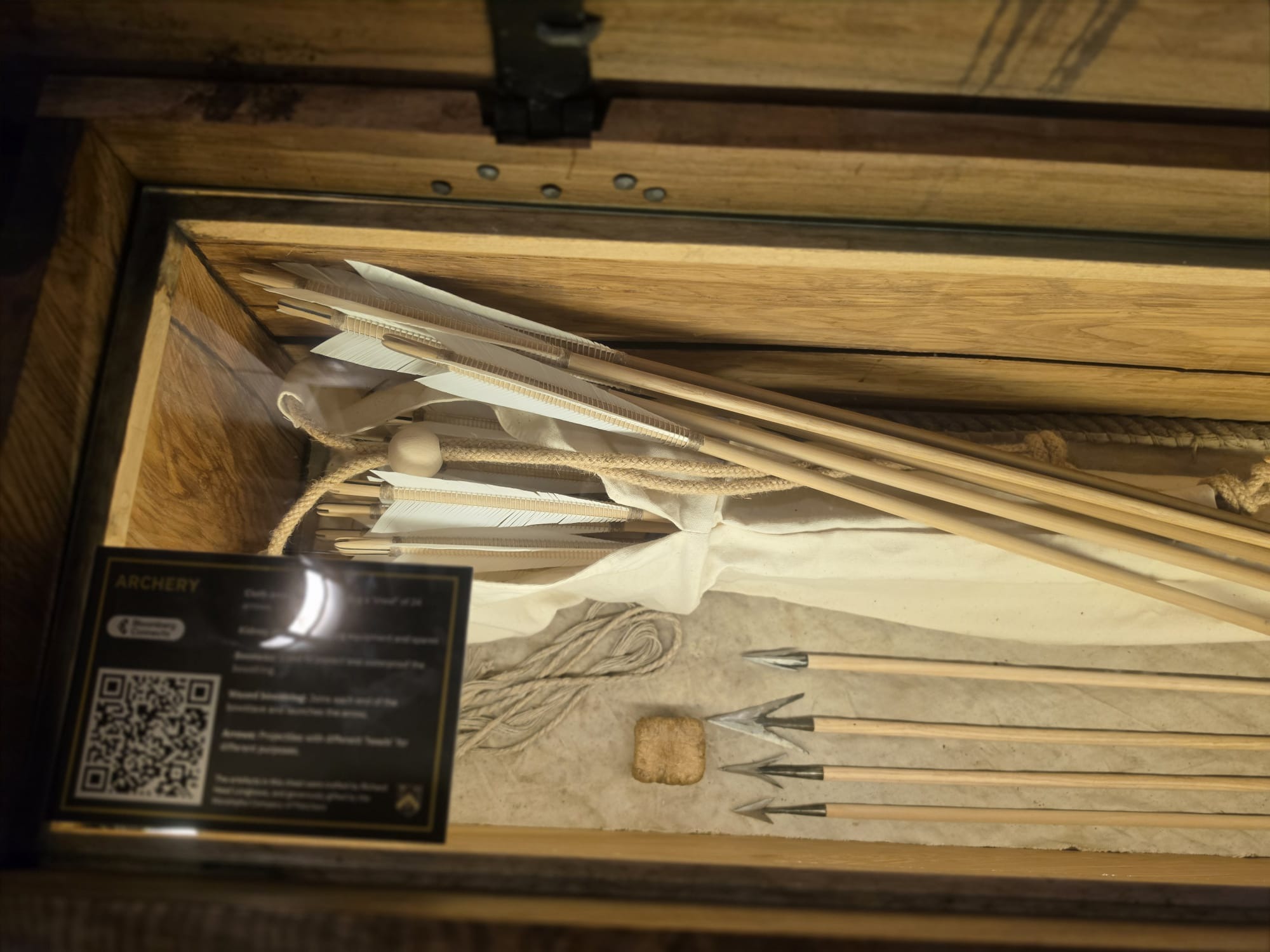
The history behind the horrors added depth. The discussion connected medical ingredients to Drake’s voyages and the spice trade, noting that pepper and cloves were valuable commodities, and we heard how Drake acquired spices in what is now Indonesia through negotiations with a local ruler. It was a good reminder that everyday ingredients once carried extraordinary economic and political weight. Then came ship’s biscuit, or hardtack, baked without sugar or salt until almost all the moisture was gone. It could survive long voyages but was hard enough to threaten a sailor’s teeth, and the guide had everyone mime dipping a biscuit into a drink and cracking it against an elbow.
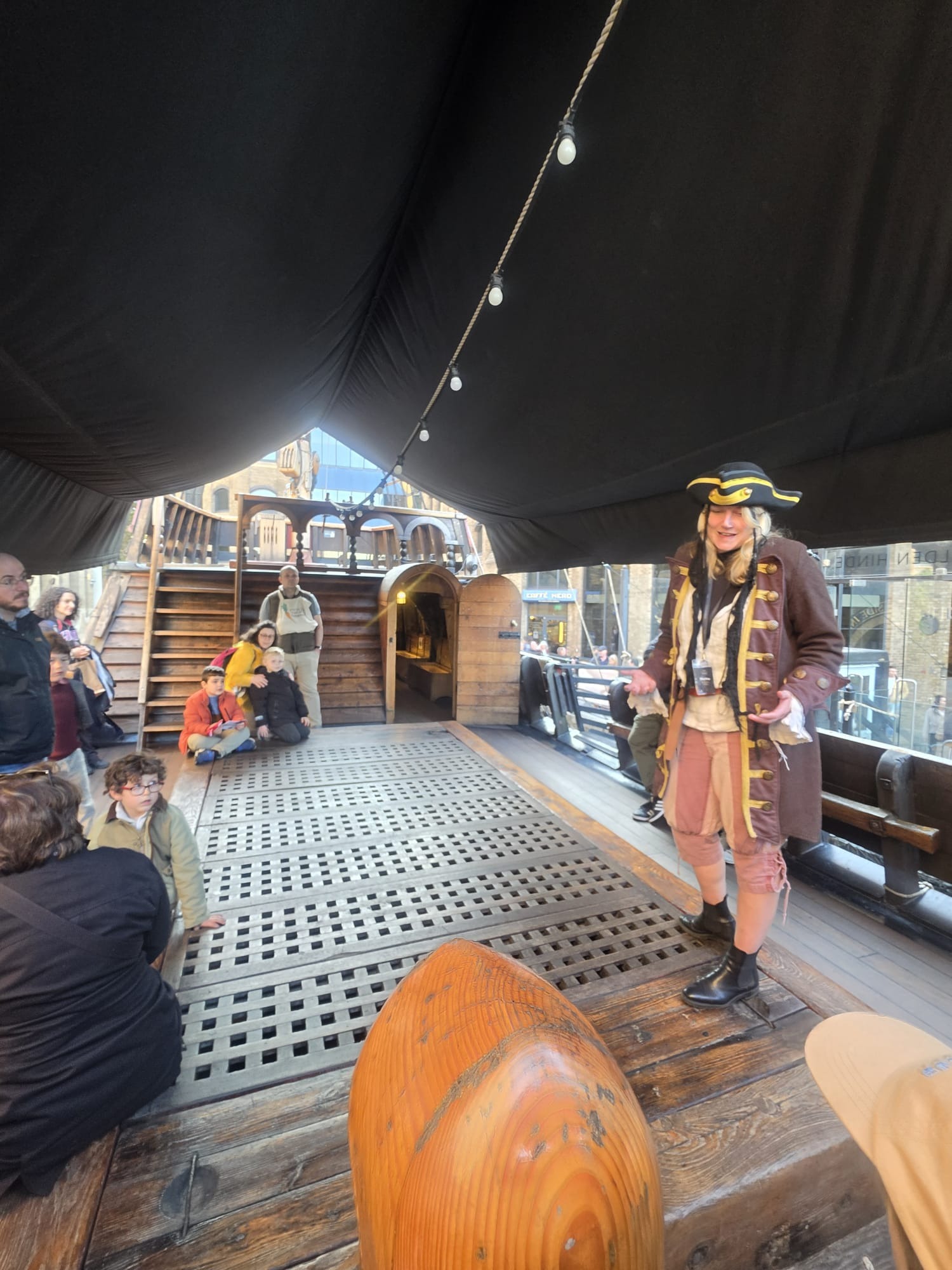
The final medical demonstration was the most startling. With fresh produce scarce on long voyages, digestive problems were common, and the guide introduced a clyster pipe, an early enema device, explaining how seawater might be pumped into a sailor in an attempt to relieve constipation. Children were then asked which historical treatment they would least mind enduring, which produced some wonderfully unexpected answers. It was unglamorous, uncomfortable and extremely funny.
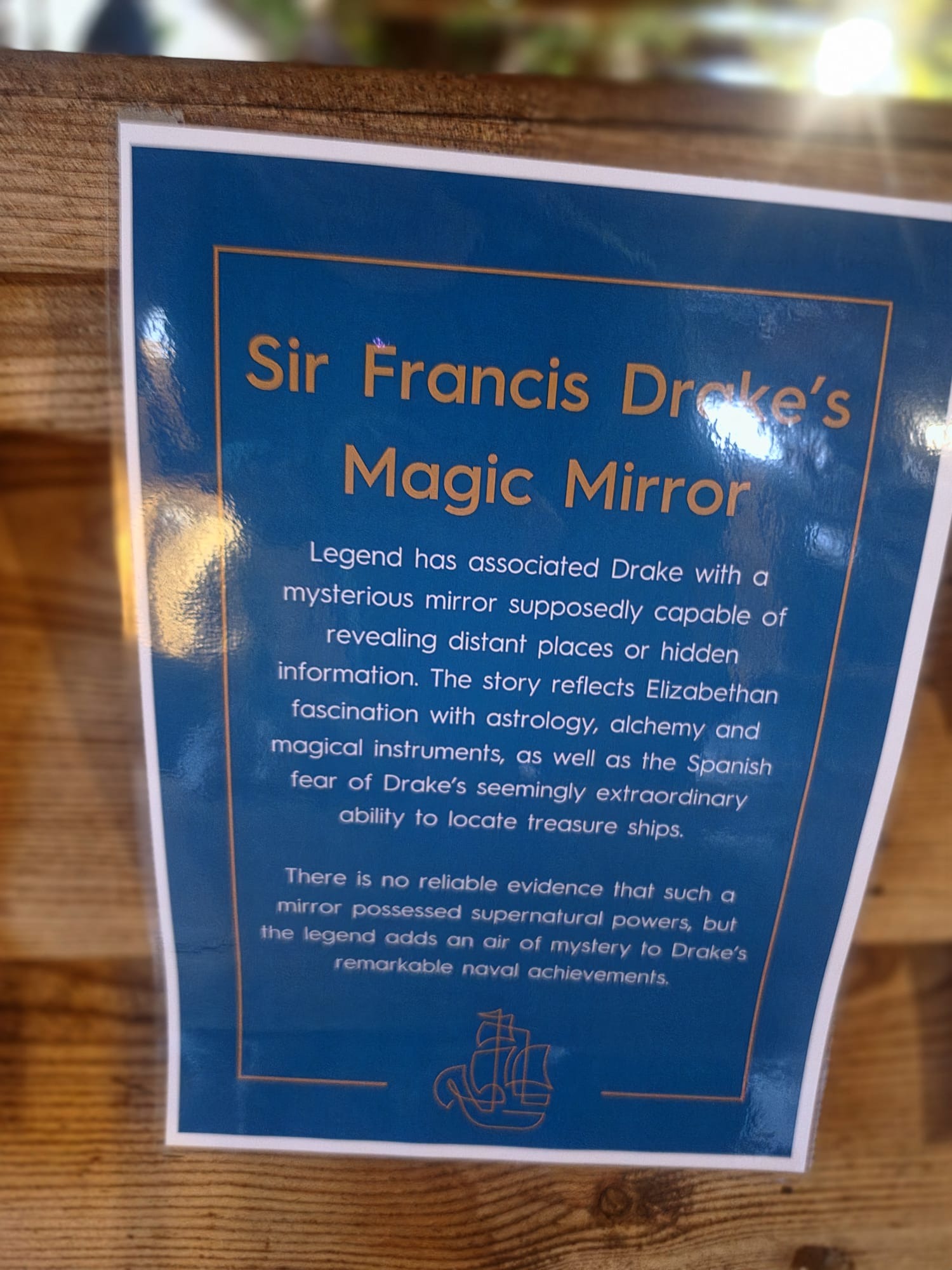
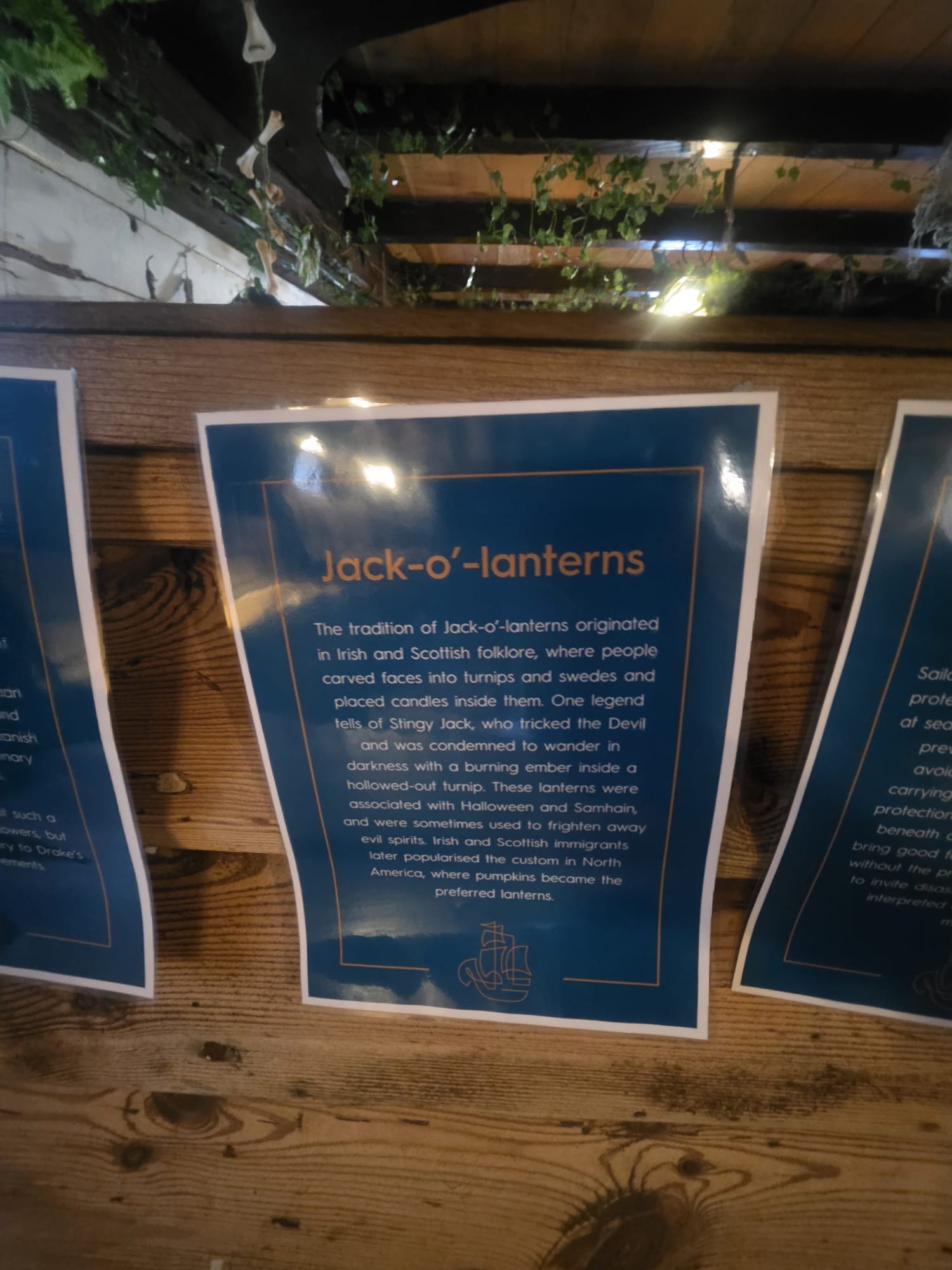
One of the experience’s greatest strengths is how well it involves its audience. The guides use props and physical demonstrations, invite questions and answer with humour, and the confined wooden setting makes stories of storms, sickness and danger feel immediate. Children can join in without the material feeling watered down for adults. The programme also moves skilfully between documented history, historical practices and folklore. Not every entertaining legend is established fact, and the guide was careful to treat the stories as a window into how people of the period understood risk, illness and the unknown.
There are quieter moments too, when a prop passes from hand to hand and the room goes still for a second. These are among the best passages of the visit. The Golden Hinde understands that the most memorable history lessons are the ones you can touch, and for families and adults who like their Halloween with genuine historical substance, this is far more distinctive than a conventional ghost tour.

