

A Ghost In Your Ear is not interested in shocking its audience. It is more patient than that, and far more precise. Overall, it was the right amount of creepy sensory experience meets folk horror - like Darkfield but with visuals and a full end-to-end storyline. Fantastic!
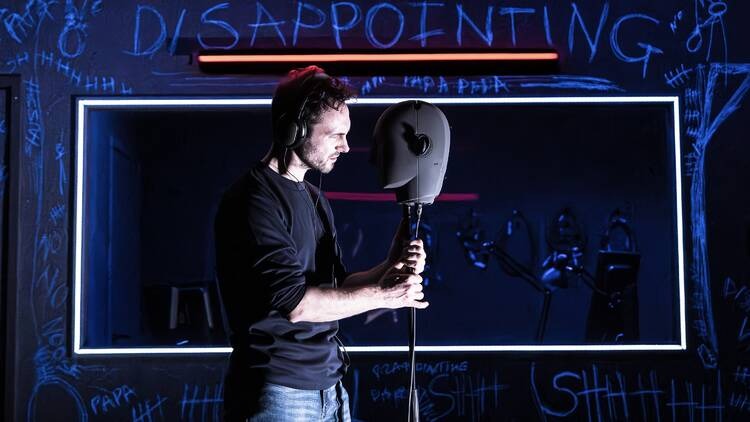
The premise is simple enough: an actor arrives late to a sound studio to record an audiobook. The job is vague. The script is unfamiliar. Nothing appears overtly wrong. The play allows that normality to settle before it begins, which is what makes the shift that follows so effective.
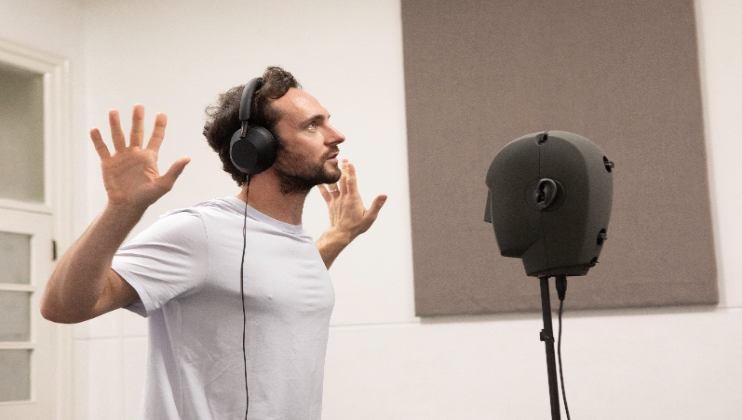
The sound design works gradually, almost cautiously. There is no obvious moment where it announces itself. Instead, it begins to alter your relationship to the space around you. Distances feel less stable. Perspective narrows. By the time you recognise that something is off, it has become difficult to tell what belongs to the room and what your own imagination has started to supply.
George Blagden’s performance is central to this restraint. He keeps everything contained, grounded in a recognisable reality, resisting the temptation to signal fear before it is unavoidable. What you watch is not panic, but concentration under pressure. When that control begins to slip, it feels earned rather than engineered.
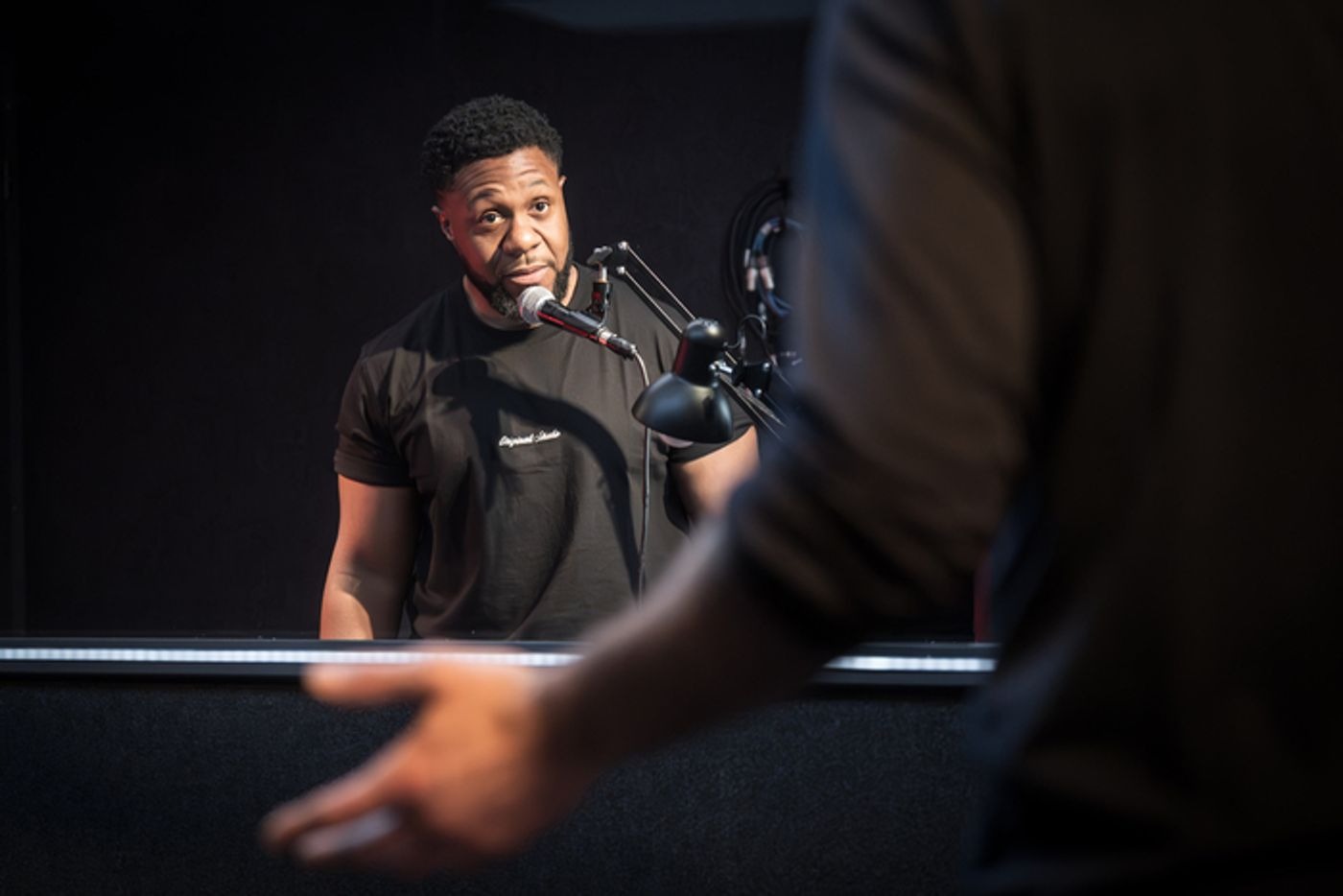
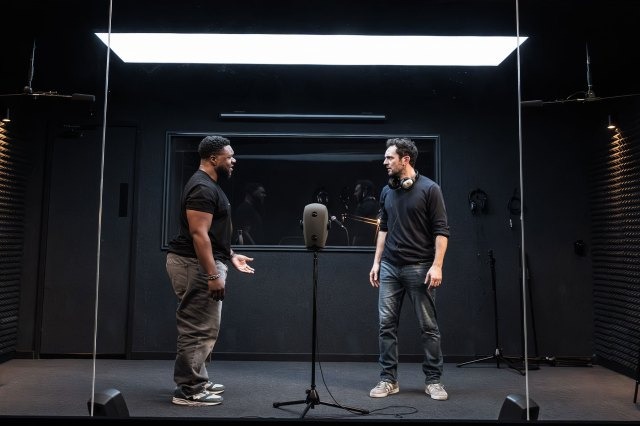
Jonathan Livingstone provides a counterweight that is both steady and faintly unsettling. There is warmth in his presence, but also a looseness around the edges that never quite resolves. The relationship between the two men anchors the piece. However strange the experience becomes, it remains rooted in human interaction rather than drifting into technical display.
At the press performance, two people left the auditorium almost immediately after the first surprise appeared. They did not wait for escalation or explanation. They simply went. I found that response telling. The moment itself is not graphic. What unsettles me is the old-school horror anticipation, the suggestion of what might follow, and the sense that the play is happy to let the audience do that work for itself.
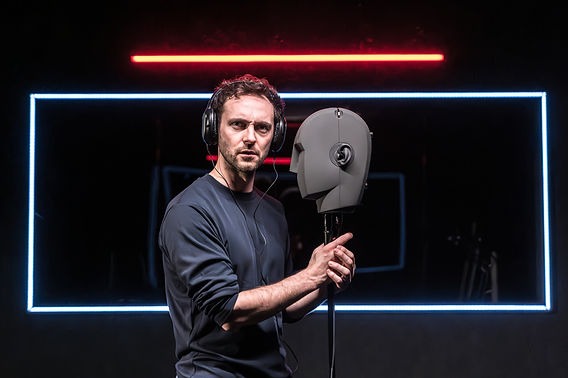
This is where the production shows real confidence. It belongs to an older tradition of horror, one that relies on narrative control rather than spectacle. There is no interest in blood or gore. Instead, the fear comes from how carefully the story unfolds, and from the gradual realisation that you are not simply observing it. Your attention, your reactions, and your assumptions are all part of the mechanism.
Jamie Armitage’s direction reflects that discipline. Moments are allowed to sit and the studio setting includes very little, leaving space for the audience’s imagination to fill in what is not shown.
As the play progresses, the boundary between listener and participant becomes increasingly thin. You begin to understand that the story is not simply being delivered to you. It is being shaped by you, whether you want that responsibility or not.
This will not be a comfortable experience for everyone. The content warning should be taken seriously, particularly by those for whom immersive sound heightens anxiety. But for audiences interested in horror that prioritises storytelling, restraint, and imagination over endurance, A Ghost In Your Ear is a rare and carefully constructed piece of work.
You leave noticing how different the room feels once the headphones come off, and how long it takes before that sense of certainty returns.

