

Becoming an Anchoress at Big Penny Social: The Radical Medieval Woman Who Had Herself Bricked Into a Room
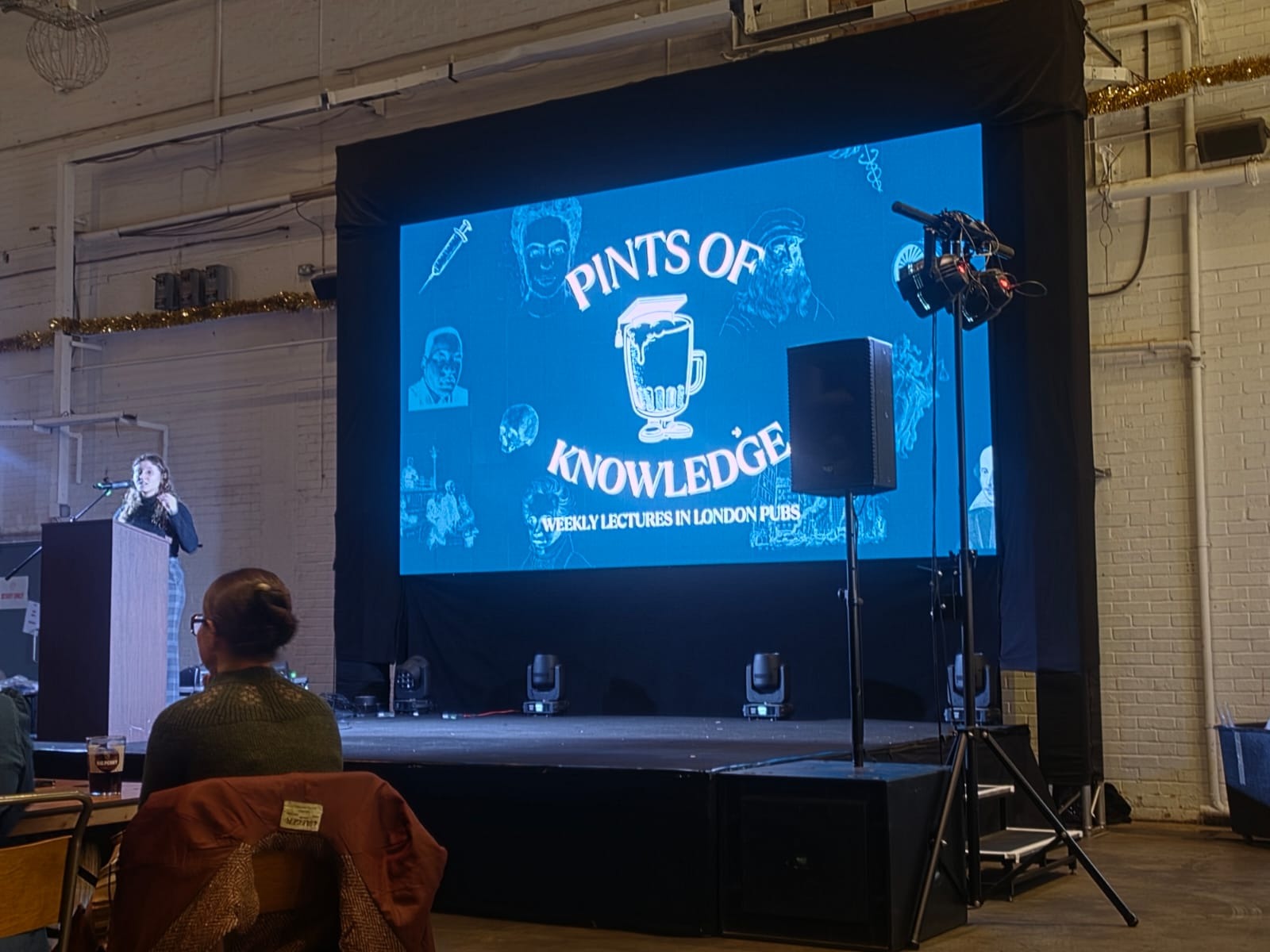
So You've Decided to Become Dead to the World: Becoming an Anchoress is the kind of talk that reminds you why a pint and a good historian make such a fine pairing. Delivered by writer Kristina Bauman at Big Penny Social, London, as part of the Pints of Knowledge series, it asked a gloriously provocative question: what if the most radical thing a woman could do in medieval England was to get herself sealed into a tiny room? The answer, over about forty minutes, was a funny, lively and surprisingly moving reassessment of one of the strangest chapters in medieval life. The crowd's attention never dipped. If you like your history delivered with wit, curiosity and a healthy suspicion of received wisdom, this was the right way to spend your night.
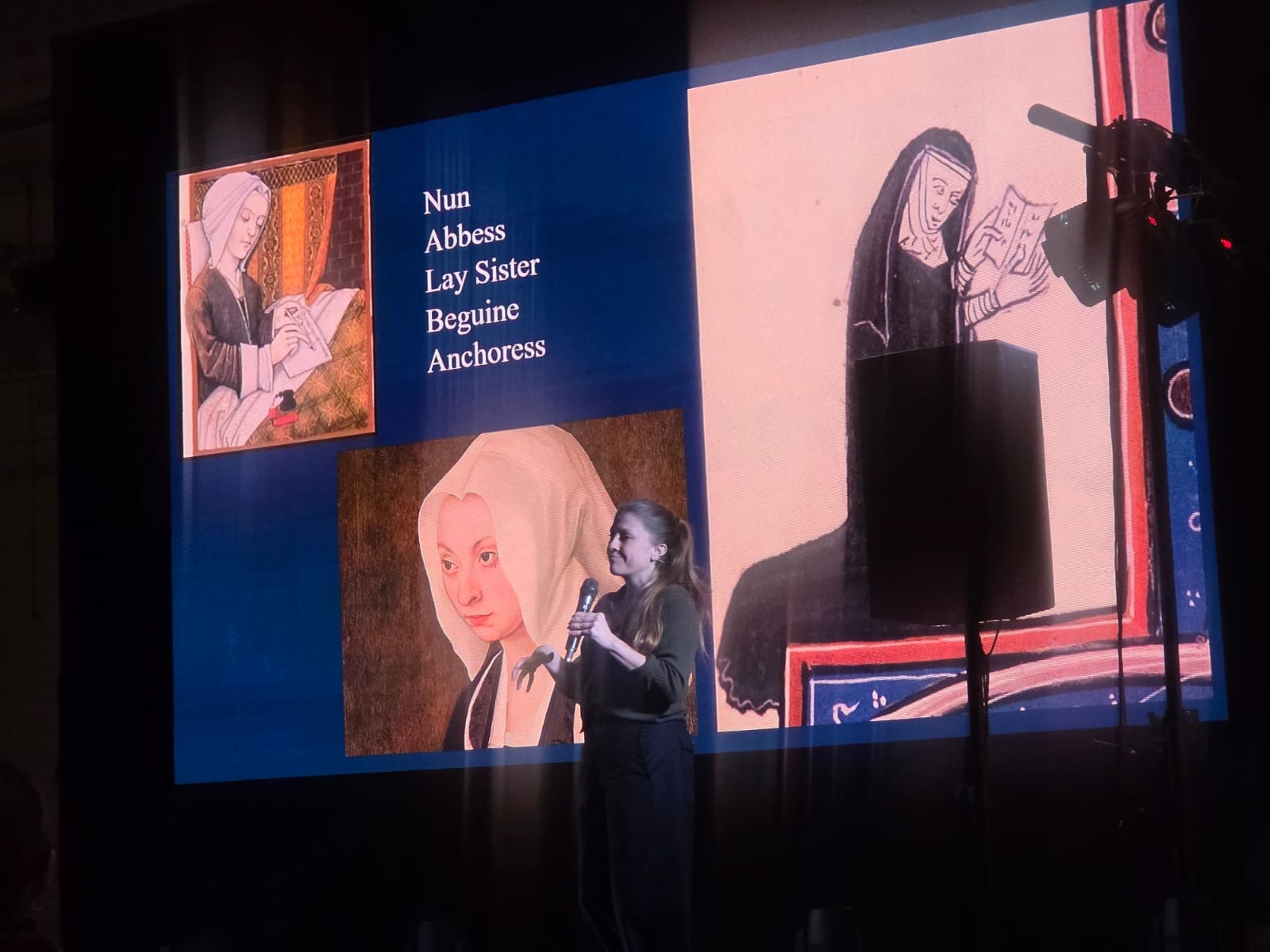
The premise is bold, and Bauman wastes no time leaning into it. Anchoresses were women who voluntarily sealed themselves into small cells attached to churches and declared themselves dead to the world, with no human touch, no sunlight and few creature comforts. Maybe a cat. Bauman uses that last detail as a running joke, and it sets the tone: serious subject, light touch. The talk begins with the image of confinement as horror, then spends the rest of the hour taking it apart. From the opening minutes you can see where the evening is heading, and it is a pleasure to be led there.
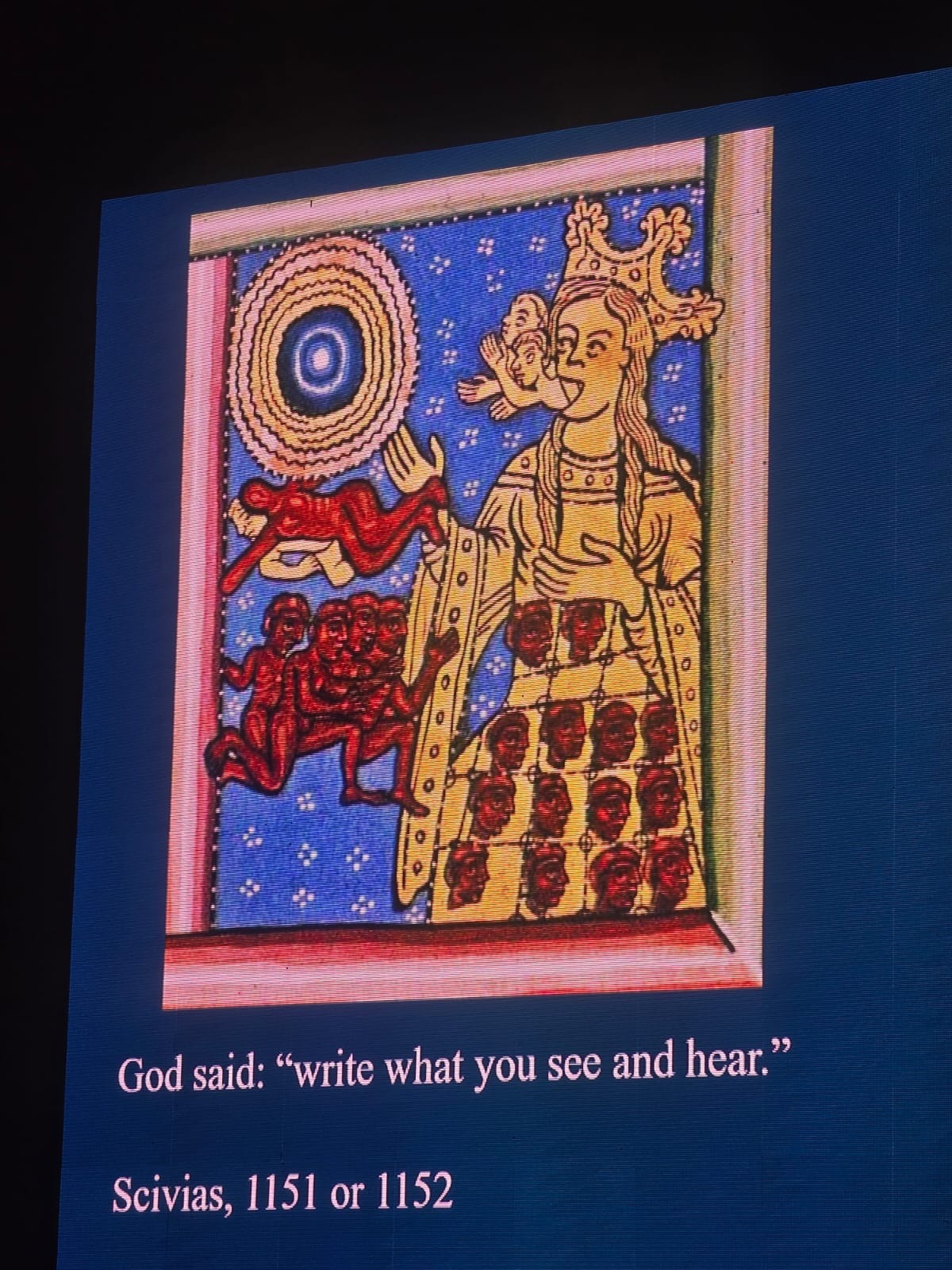
What works especially well is the argument. Bauman presents the anchoritic life not as a story of grim oppression but as one of radical female agency. In a society that defined women's lives by marriage, childbirth and obedience, the anchorhold offered autonomy, intellectual purpose and spiritual authority. Anchoresses were respected members of their communities, and, as the talk put it, they outnumbered their male counterparts four to one. It's a neat reversal, and she makes it persuasively without overstating her case. The most famous example is Julian of Norwich, who produced what is often described as the earliest surviving work by a woman in the English language, written entirely from her cell. That detail lands with real force: confinement, here, was the thing that made the writing possible.
The practical details are where the talk comes alive. Bauman walks the audience through what daily life looked like inside the anchorhold, the rulebook the women lived by, and, most entertainingly, what happened if you changed your mind. Those are the questions an audience really wants answered, and she handles them with an anthropologist's curiosity. That background, as a former anthropology teacher in the US, shows in the way she treats the medieval world as a culture to be understood rather than a curiosity to be mocked. She is also the creator of @medievalmarginalia, which shares the stranger corners of medieval history, and her stated mission to correct people's misunderstandings of the Middle Ages gives the evening a gentle, good-humoured edge.
The format helps. Pints of Knowledge is built around an informal setting, with a talk of about forty minutes followed by roughly twenty minutes of audience questions, and the relaxed room suits the material. You can have a drink, ask what you like and follow the argument without feeling you are in a lecture hall. The questions after the talk are often the best part, and an audience that has just been told that anchoresses were intellectual powerhouses tends to arrive with plenty to ask.
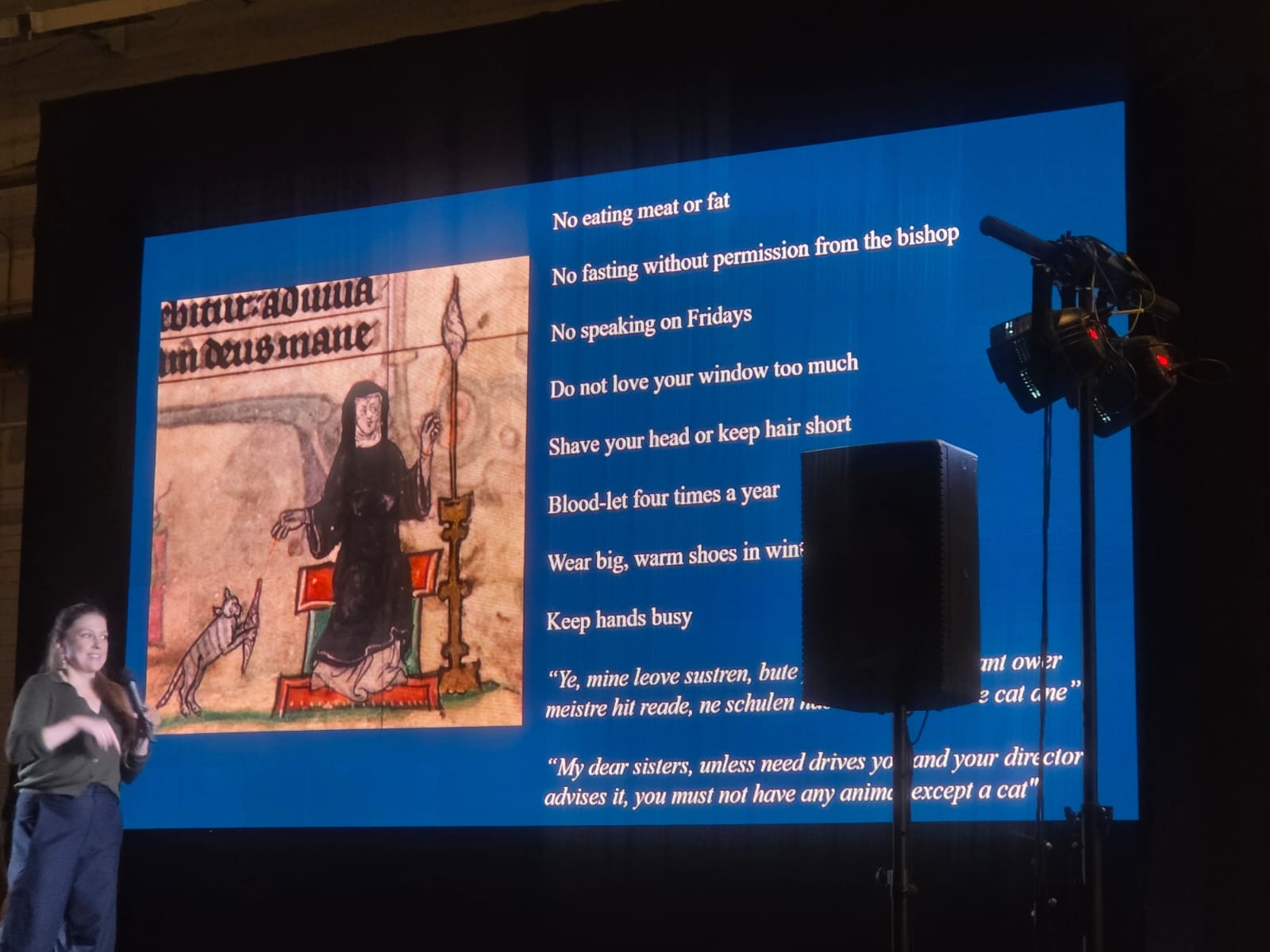
One of the talk's greatest strengths is its balance between amusement and substance. The jokes never cheapen the subject, and the history never feels heavy. Bauman clearly loves the material, and has recently finished a historical novel inspired by medieval women called to extreme expressions of spirituality, so there is a storyteller's sense of pacing behind the scholarship. The talk invites you to reconsider ideas of confinement and freedom, and to ask who gets to define which is which.

