

Too Small to Tell at Riverside Studios: A Candid Solo Story of Power and Voice
Too Small to Tell at Riverside Studios is a striking one-woman show written and performed by Lisa Rose, directed by Elizabeth Ranken and co-created with Paula B. Stanic. Based on Rose’s own experiences working in the London office of Miramax in the 1990s, the piece blends humour, heartbreak and hard-won testimony as it reflects on ambition, friendship, silence and survival within an industry built on secrecy and power. With sold-out runs at Park Theatre and Upstairs at the Gatehouse and a nomination for Best New Play at Brighton Fringe 2025, this solo performance brings a deeply personal story directly to the stage.
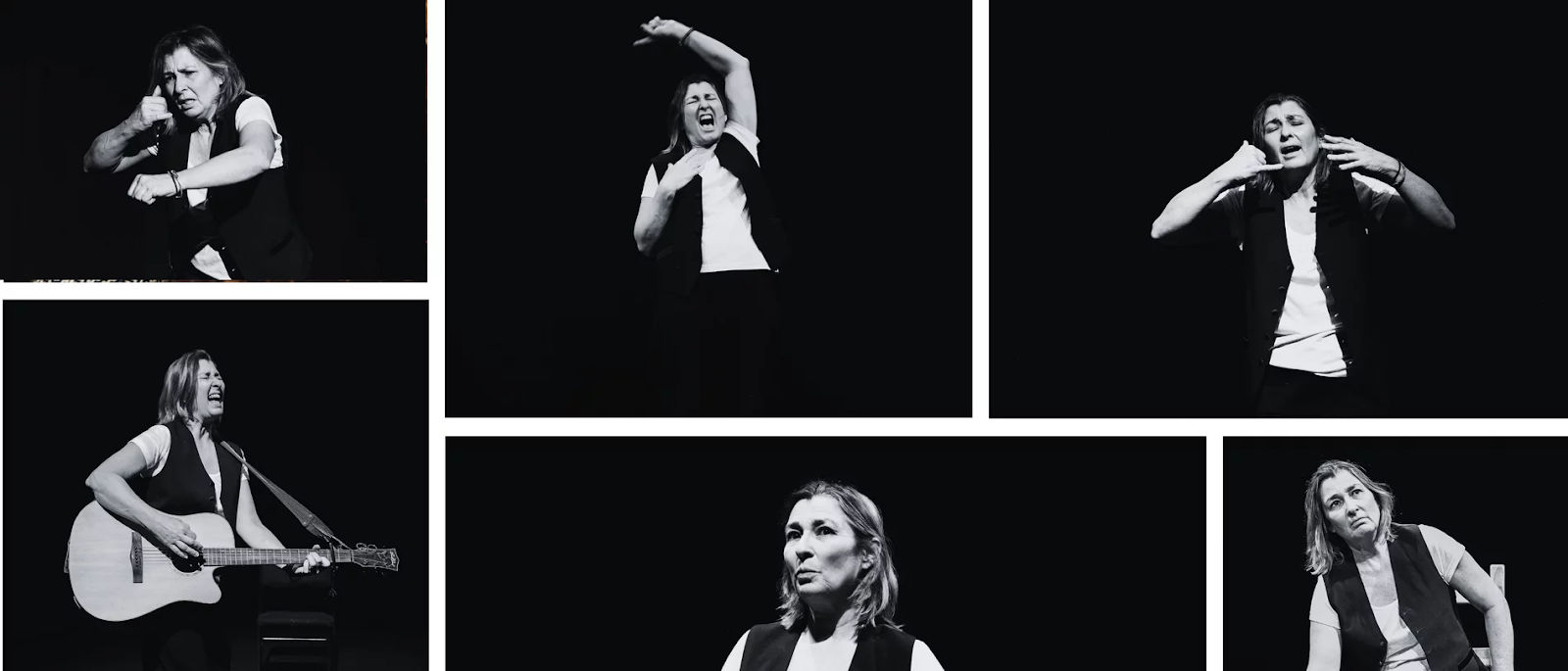
The show begins with an evocative montage of old Hollywood glamour flickering on a screen behind Lisa Rose, the voices of acceptance speeches and black-and-white cinema images merging with her voice as she steps into a pool of stark light. That opening beat of glamour and grit side by side immediately anchors the production in memory and discomfort, setting up a tension that carries through every minute of the 60-minute run.
What Too Small to Tell does especially well is let Rose’s voice and physical presence carry the emotional freight. When she asks, simply and directly, “Why now?” early in the piece, it isn’t just a rhetorical question; it’s an invitation into her lived experience of an era before the #MeToo movement had a name. This clarity of speech makes its impact clear: she’s not just recounting events, she’s asking you to sit with them.
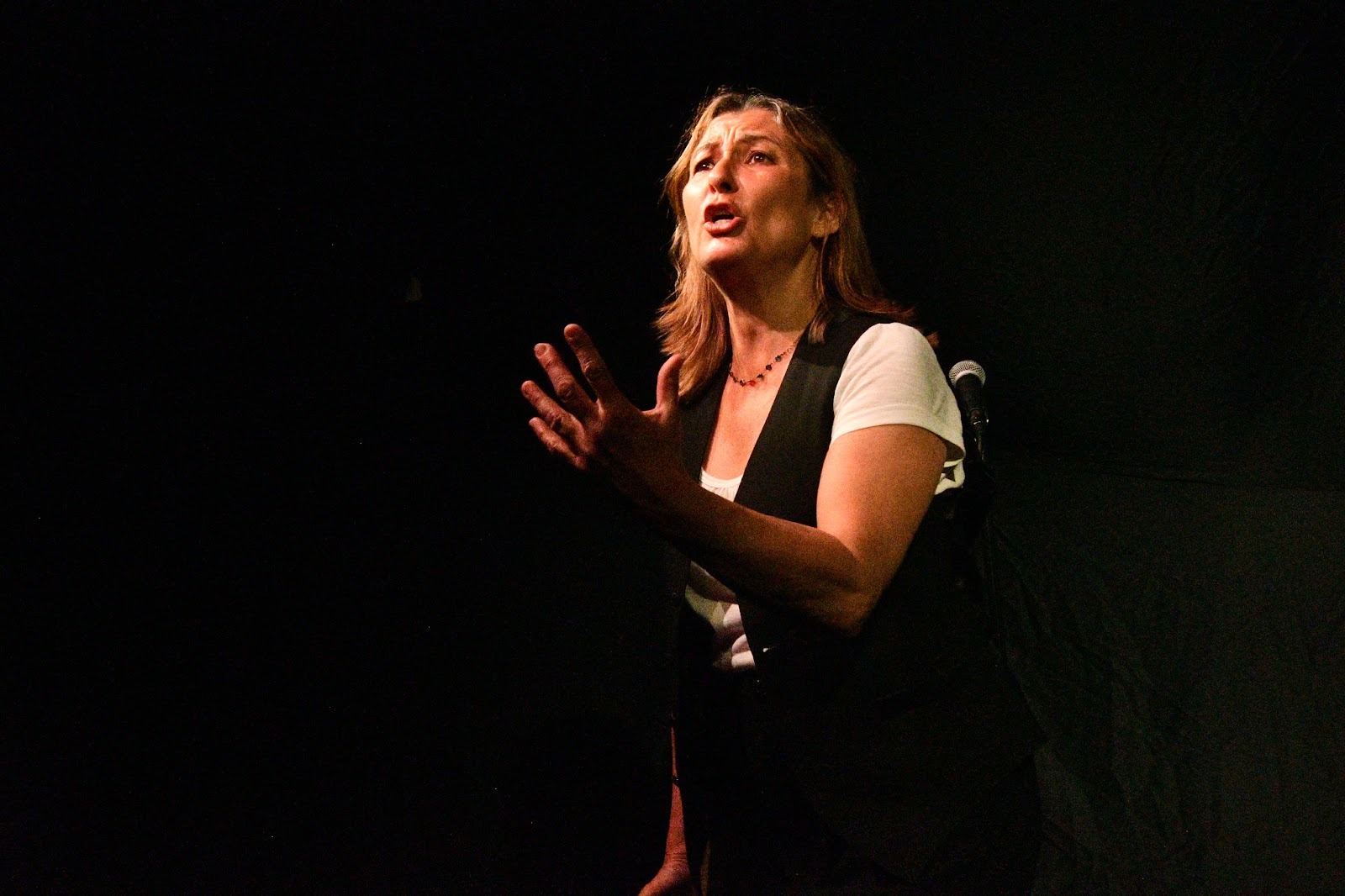
Rose shifts between roles and memories with confident physical work, moving from her younger self to colleagues in the office and the wider world, each shift shaped by subtle changes in posture and expression rather than costume or props. A single standing microphone becomes a bridge between storyteller and audience: when she steps up to it, she meets your gaze and you feel the vulnerability of her truth; when she steps away, she inhabits another moment, another voice, with technical precision that keeps you anchored in her narrative.
The creative choices with minimal set, black-and-white lighting, and clever sound cues support rather than distract from the storytelling. A flickering screen behind her doesn’t simply decorate the space; it reminds you of the wider cinematic culture that shaped and, at times, warped the lives of women in the industry.
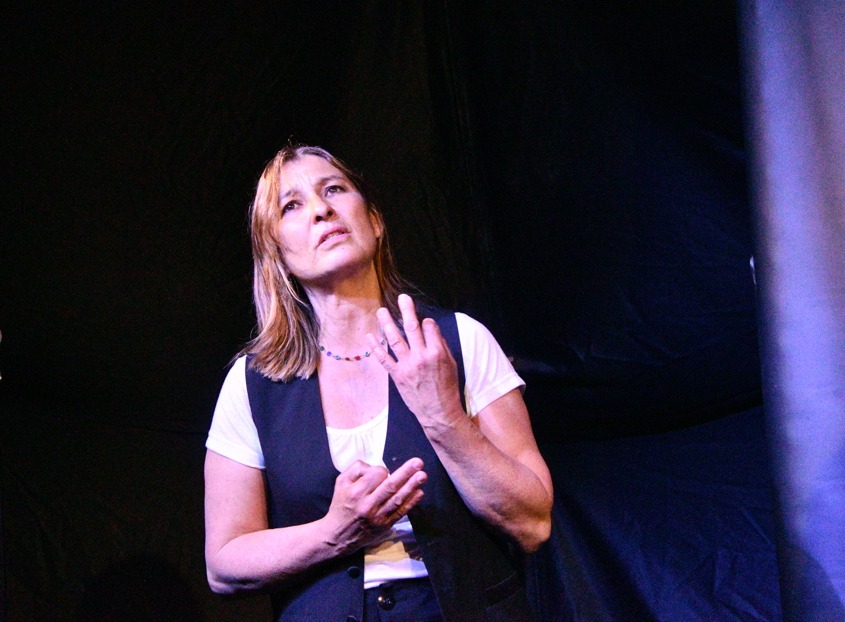
By the end of the performance, Too Small to Tell leaves you with more than a retrospective account of Hollywood’s past; it frames a message about resilience, sisterhood and empowerment. In Rose’s own words and gestures, there’s a reminder that even voices once deemed too small can resonate and matter long after the curtain falls.

