

Jackson Heights Food Tour at Eat Your World: Five Stops, 165 Languages and the Best Argument for Eating Your Way Through Queens
The Jackson Heights Food Tour, run by Eat Your World and organised by Laura Siciliano-Rosen, is a reminder that some of the best ways to understand a city are also the most delicious. Jackson Heights is regularly described as one of the most linguistically diverse neighbourhoods anywhere, and a walk through it, fork in hand, makes that statistic feel less like a fact and more like a lived experience. Our guide was Sonya, a Jackson Heights resident of many years who is a painter and mixed-media artist, a cookbook author and a licensed New York City tour guide of about fourteen years. She works alongside Laura, who lives on the same street and covers the tours Laura can’t lead herself. Over five stops, the afternoon moves between South Asia, the Himalayas and the Andes without ever leaving a few walkable blocks of Queens. It is generous, well-paced and thoroughly informative, and you will not need dinner afterwards.
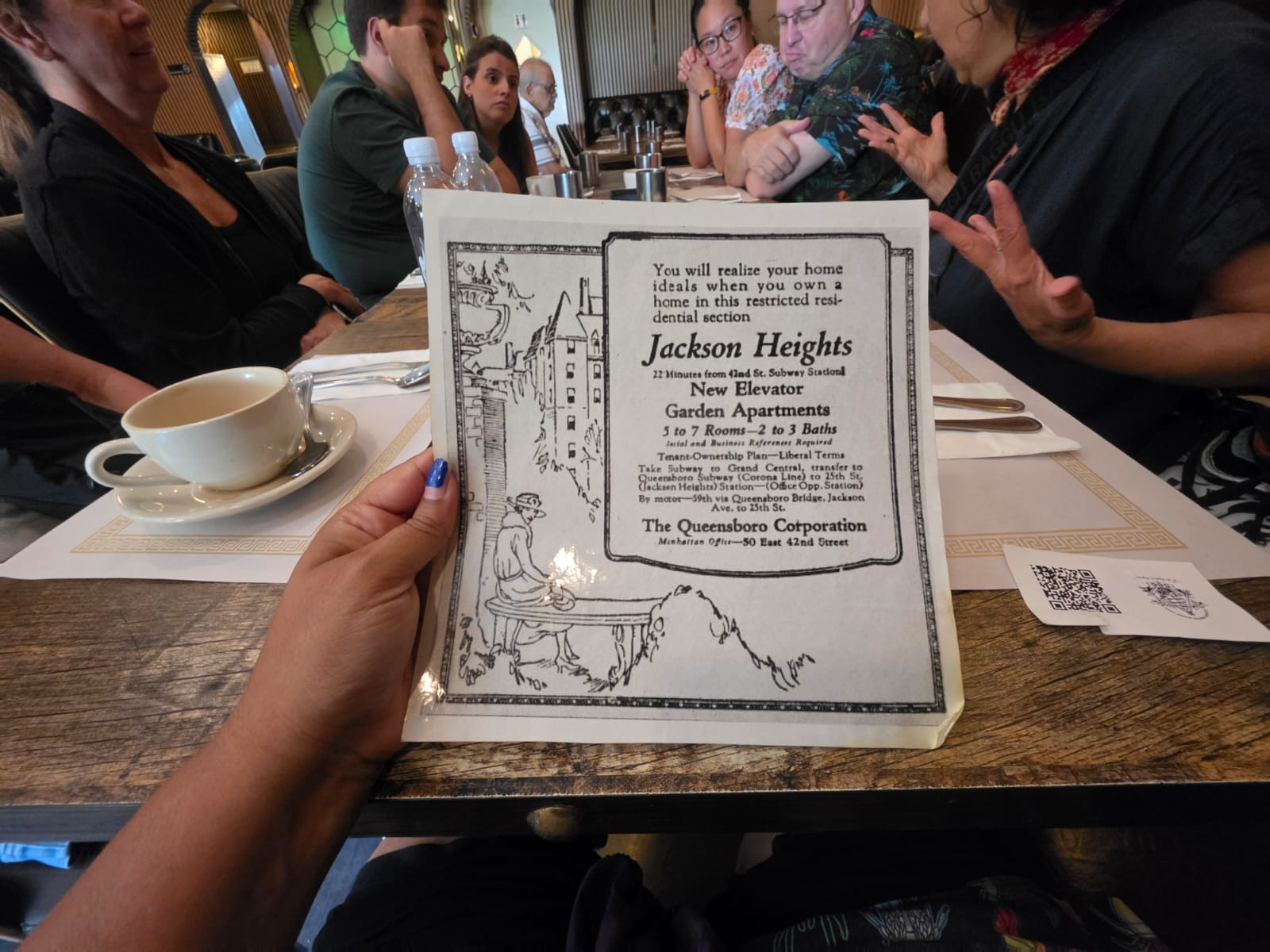
Before any food arrives, Sonya sets the scene with a short history lesson, and it is one of the tour’s smartest choices. She begins with the arrival of the first underground subway in 1904, which meant you no longer had to be wealthy enough to own a horse to travel quickly and cheaply. A few years later, in the 1910s, a developer saw the chance to build a suburb-like district of garden apartments, close to midtown by train but green and spacious. These were among the earliest co-op buildings in the United States, arranged around large private shared gardens that are now more than a century old. Sonya then points out the irony that Jackson Heights, so green behind its walls, has the least public green space of any New York neighbourhood, a claim she makes with a guide’s relish for a good paradox. That one detail does a lot of work. From the first ten minutes, the tour shows that it is interested in the forces that shaped the streets as much as in what is served on them.
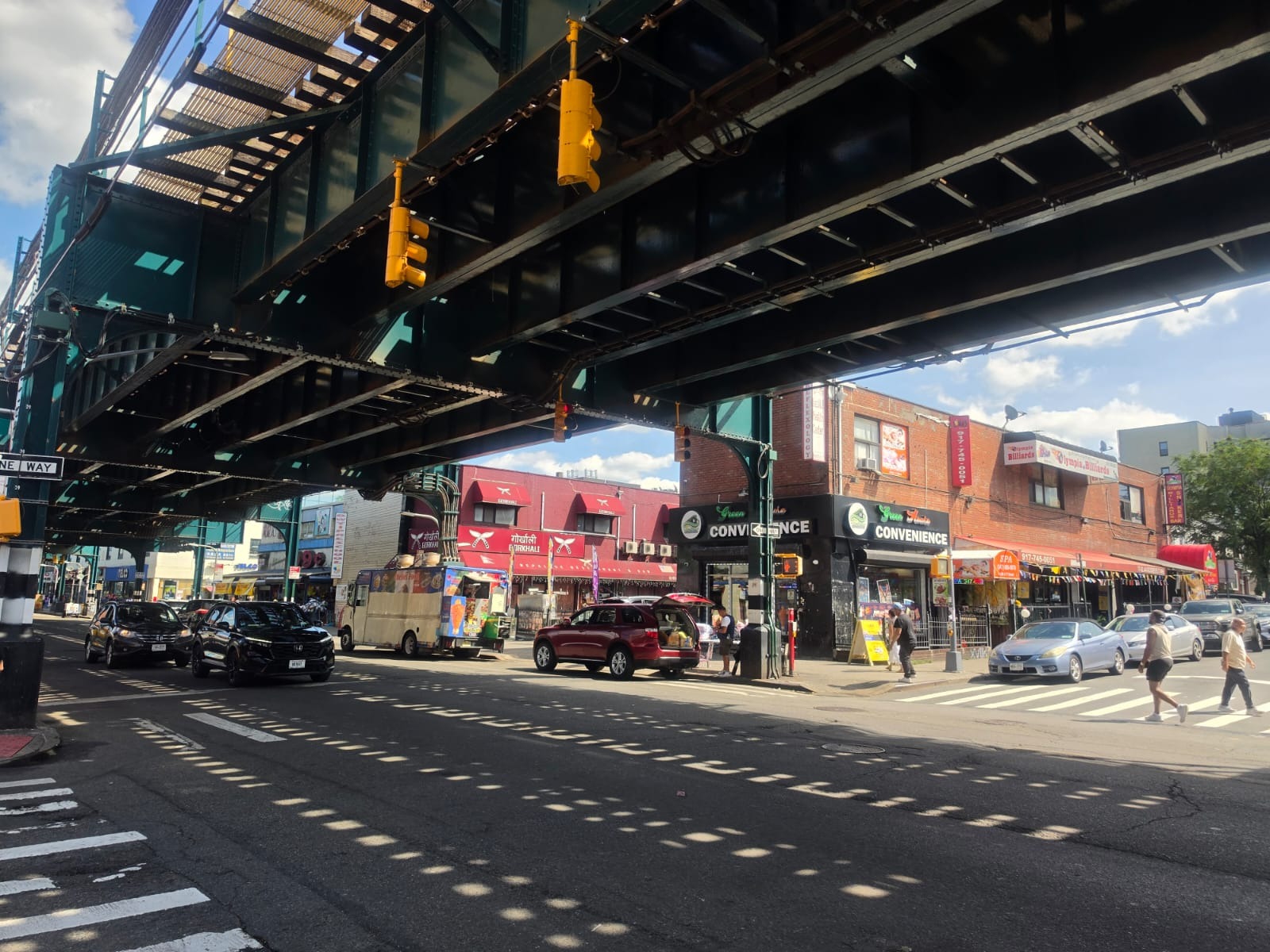
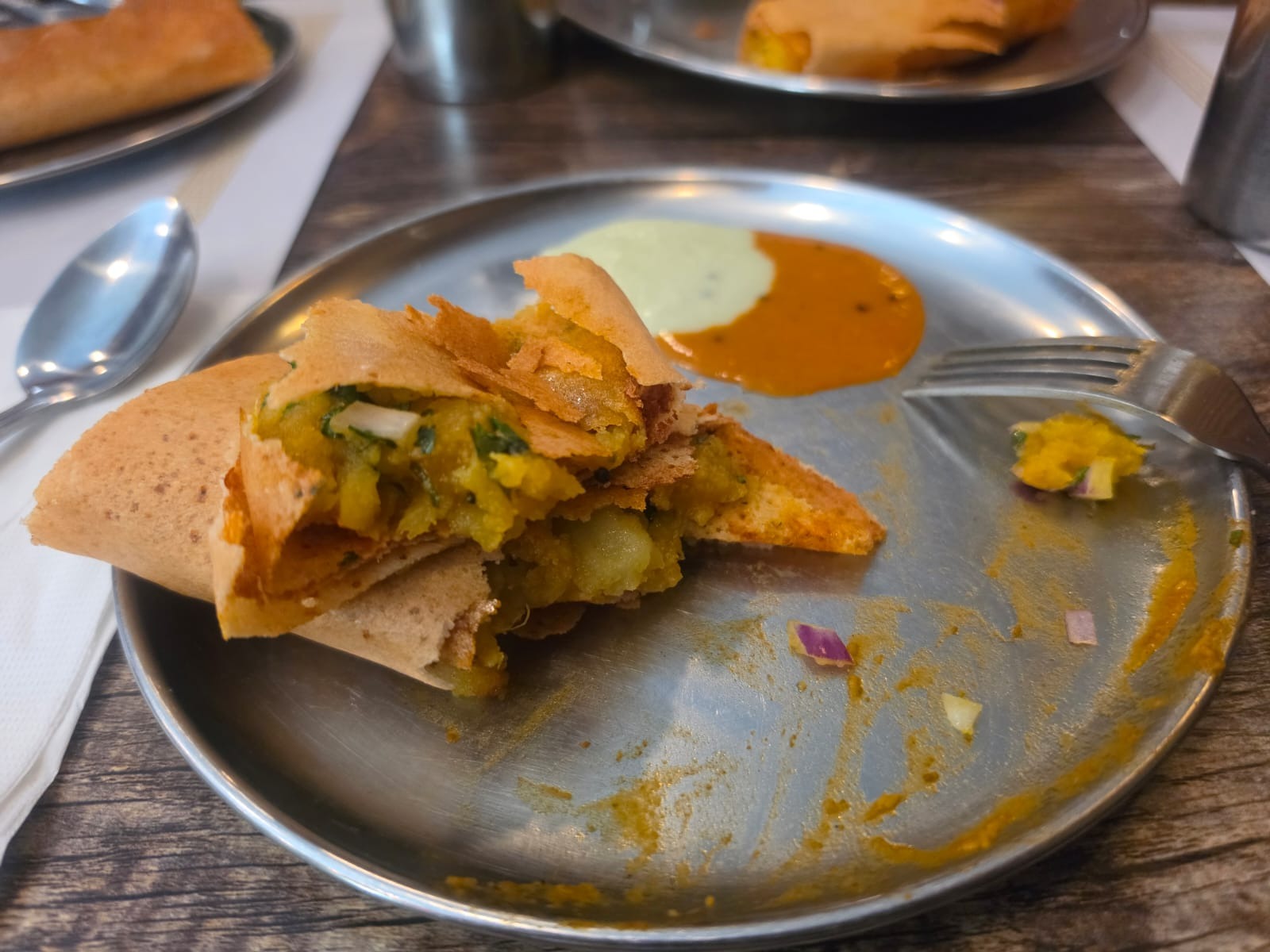
What works especially well is how naturally the history leads into the food. Sonya connects the neighbourhood’s diversity to the 1965 Immigration Act, noting that 165 languages are spoken here, and the point lands because the next hour proves it plate by plate. The first stop, Dosa Delight, is the clearest example. A Pondicherry dosa, made from fermented batter in the South Indian tradition, arrives alongside papri chaat, a cold dish that Sonya cheerfully calls the Indian version of nachos. It layers potato, chickpeas, onion and chana masala under yoghurt and the classic trinity of mint, tamarind and other chutneys, with crisp pieces of chickpea-flour pastry on top for crunch. It is a lesson in how texture and flavour can be balanced in a single bite, and the chai that follows is the right way to finish. Sonya also points to Jackson Diner as part of the neighbourhood’s long Indian dining story, a useful marker of how established these food communities are here.
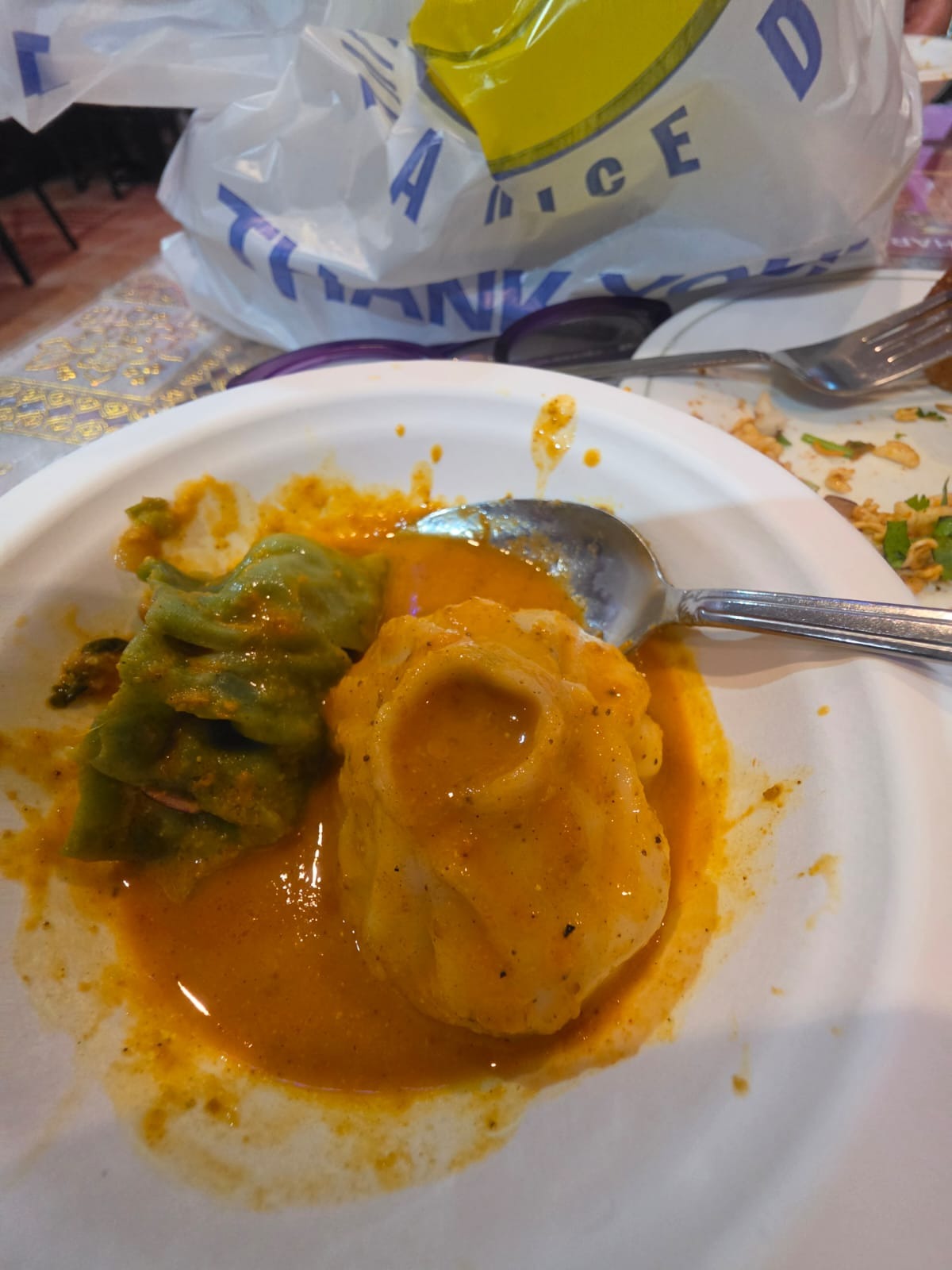
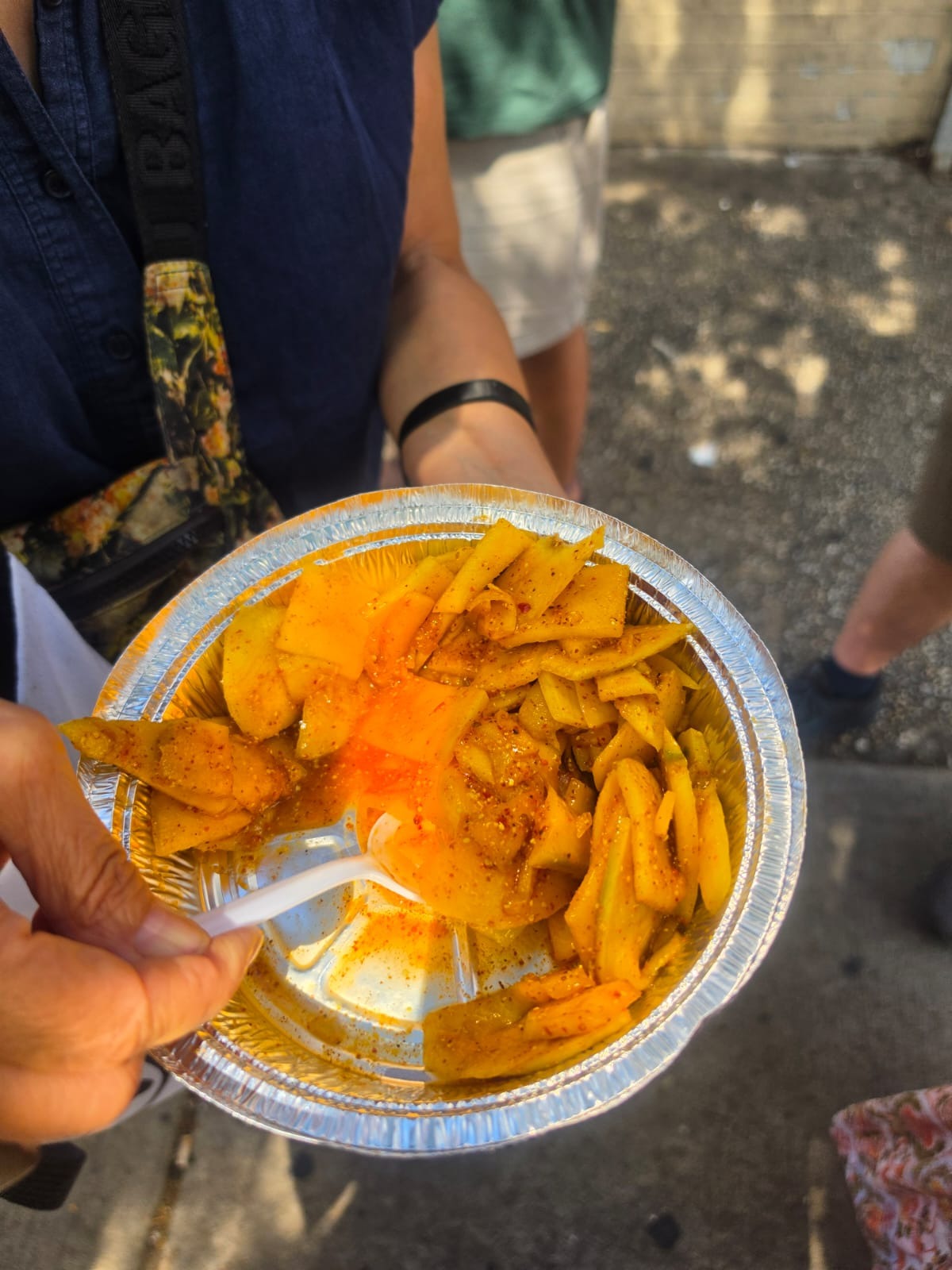
The rest of the route shows how much ground the neighbourhood covers. At Fuska House, a Bangladeshi and Bengali spot, we try fuchka, the crunchy hollow shells filled and dressed to order, and a bright fruit chaat. Next comes a food truck, Amdo, serving Tibetan beef and chicken momos. At Nepali Bhanchha Ghar the Nepali dishes arrive thick and fast: sel roti, the fried rice-bread rings, waiwai sadeko, a marinated, crunchy take on instant ramen, mango lassi, and jhol momo, goat and paneer dumplings in a soupy, tangy chutney. The two momo stops sit side by side, and Sonya explains that Tibetan and Nepalese momos are distinct styles, so you taste the difference rather than simply being told about it. She adds that the neighbourhood’s momo scene is competitive enough to inspire a Momo Crawl, a neighbourhood tradition of tasting single momos for around a dollar each and voting for the best, with a trophy for the winner. The Nepali stop’s owner, Bimla, also gets a mention for a broth Sonya calls amazing, and the jhol momo bears that out.
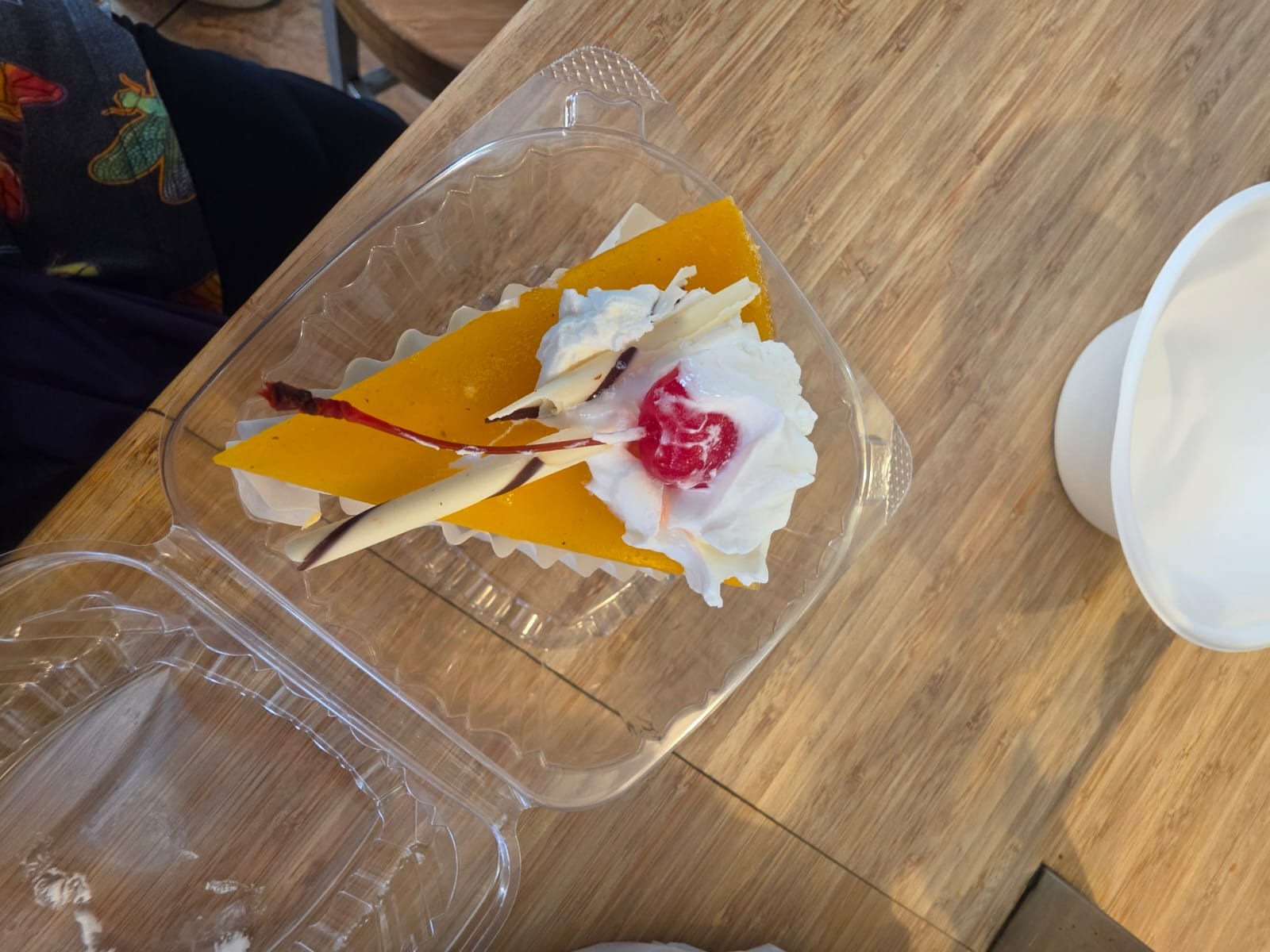
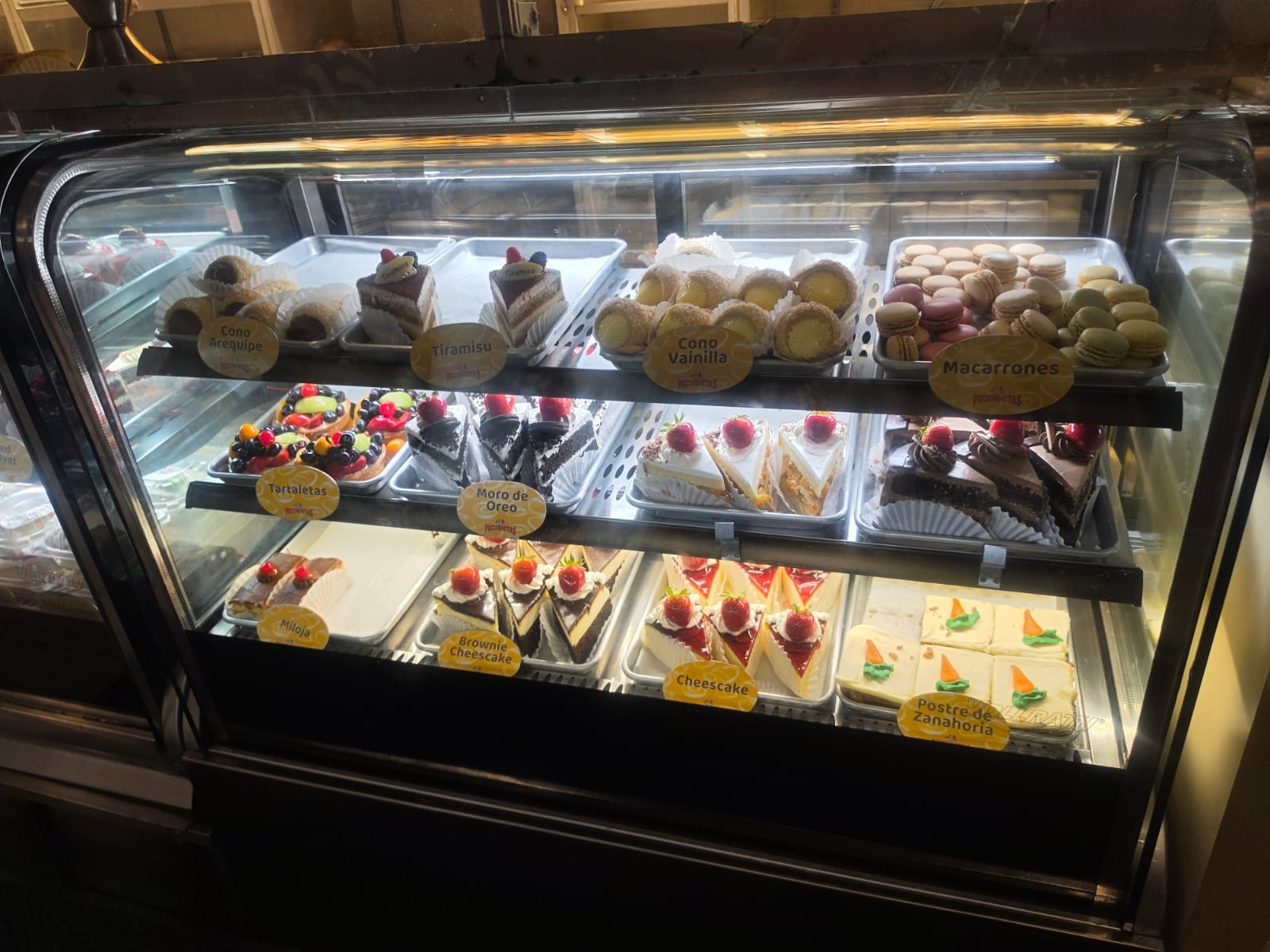
The final stop is Pecoshitas, which takes the tour to Colombia and ends it on a sweet note. Pandebono, the warm cheese bread, is soft and savoury, and the desserts are a perfect closing pair: a mousse de maracuyá, bright and tart with passion fruit, and miloja, a layered pastry with custard and arequipe, a relative of dulce de leche. After the heat, tang and crunch of the previous stops, the gentler sweetness is exactly right.
Sonya’s guiding is the glue that holds this together. Her background as an artist, a cookbook author (including The German Jewish Cookbook, published in 2017) and a historian of the neighbourhood means she can switch between food, architecture and community history without it feeling forced. She is also candid about the neighbourhood’s more recent past. She notes the lively Pride parade each June, and she mentions the pressure the community faced during the Covid crisis, when nearby Elmhurst Hospital became a focal point for the city. Those moments add weight to the afternoon and remind you that the people behind each counter are neighbours as well as cooks.
One of the tour’s greatest strengths is its balance between playfulness and substance. The humour comes easily, from jokes about nachos and trophies to Sonya’s affectionate asides about her own street, and it never undercuts the history she is sharing. The tour also deals respectfully with a neighbourhood that is still changing, rather than treating it as a finished museum piece.
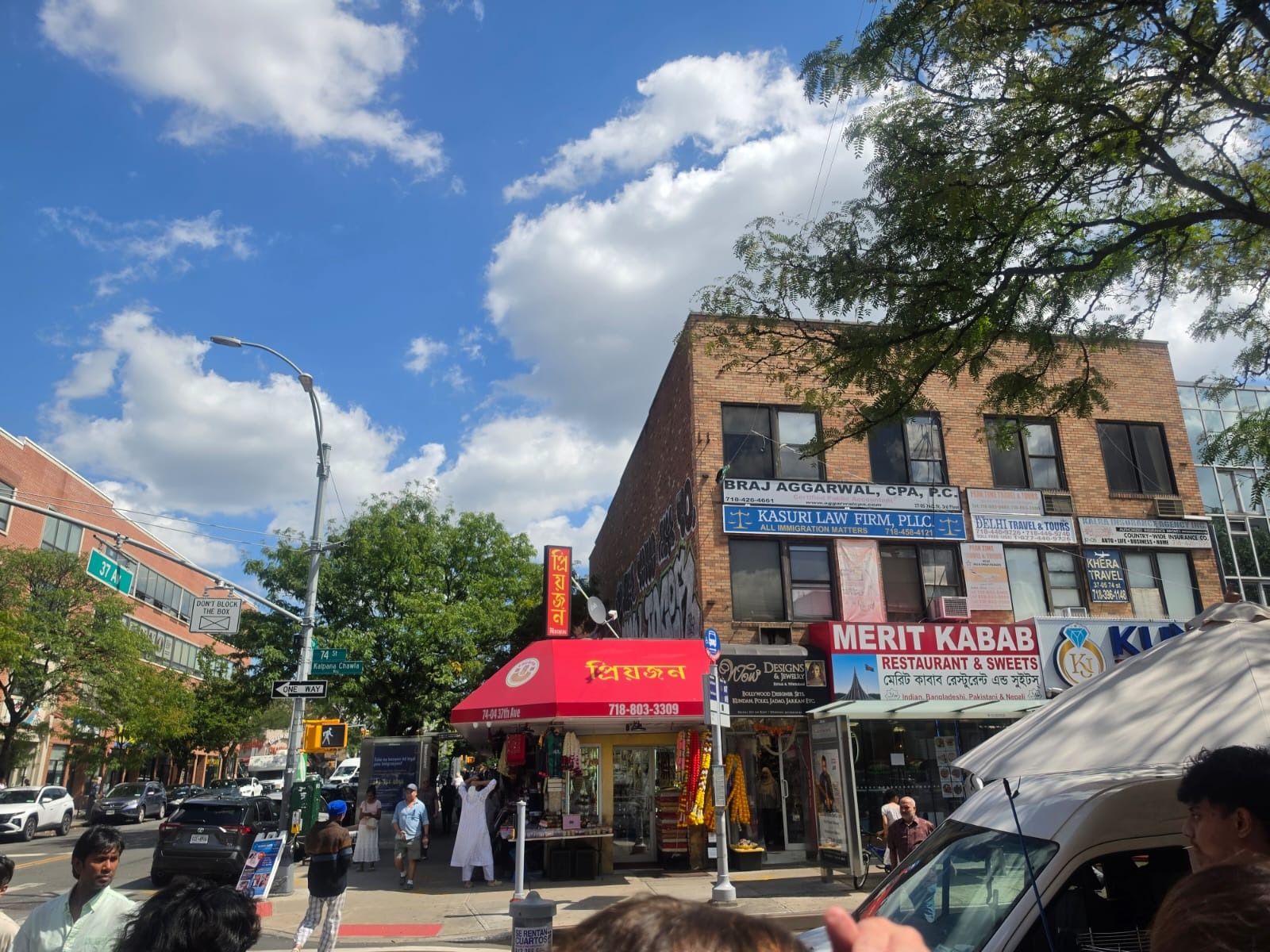
There are quieter moments between stops, when the group walks past the garden apartments or the busy shopfronts and Sonya lets a detail speak for itself: a language heard on the pavement, a sign in an unfamiliar script, the smell of frying drifting from a doorway. These are among the afternoon’s best passages. Eat Your World understands that the most memorable food tours are really tours of people, and Sonya’s version of Jackson Heights carries that out with warmth, curiosity and a very full stomach.

