

GAWD v. The People at Lightroom: The AI Judge Has Heard the Evidence — and Humanity Had Better Hope It Was Convincing
GAWD v. The People, created by Nilor Studio and directed by an ensemble of human and artificial intelligence in equal, uneasy measure, is the kind of experience that reminds you why immersive theatre, when it takes a genuinely original risk, can unsettle and delight in ways that conventional performance never quite manages. Running at Lightroom near King's Cross, the venue whose eleven-metre-tall fully projected walls and vast open floor have previously hosted David Hockney and David Bowie, this world public premiere marks the first presentation of the show outside of festivals, following its official selection for the Immersive Competition at Cannes 2026. It is funny, uncomfortable, entirely unpredictable, and over in an hour that feels both perfectly judged and not quite long enough.
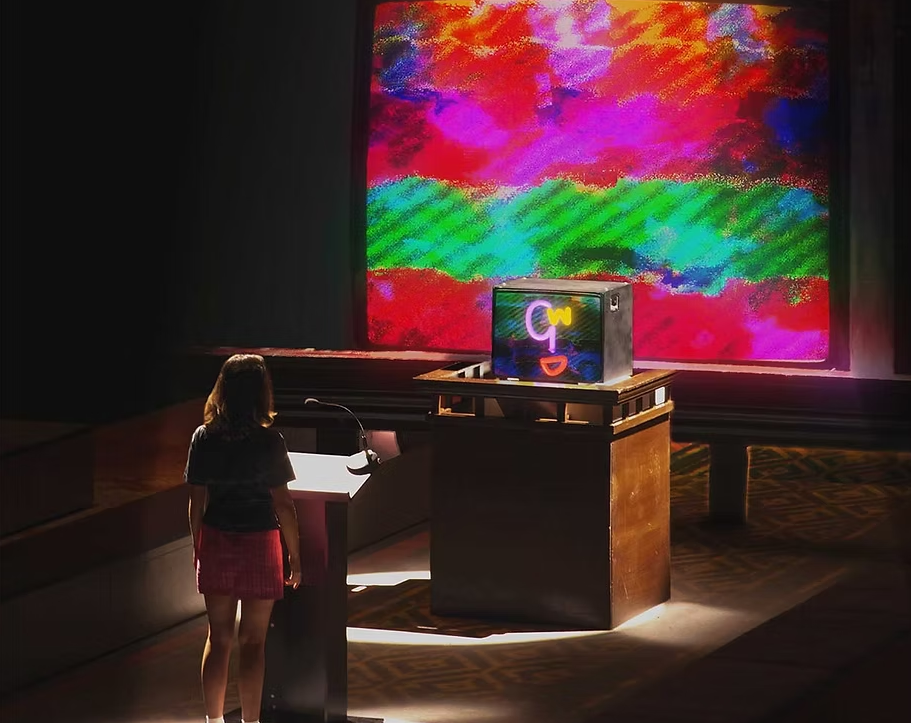
The premise announces itself without ceremony. Humanity is on trial. The judge is an AI agent called GAWD rendered on a dated box television wearing a judge's wig, speaking in a disarmingly childlike voice, depicted by a G-shaped face and red lips that look, as one audience member put it, like an Art Attack mash-up. The courtroom itself is about as standard-issue as courtrooms come: No flashy sci-fi design, no hyper-futuristic staging. And yet the simplicity of the set-up is a trap, because within minutes the gap between the mundane visual language of the proceedings and the enormity of what is actually being decided begins to generate a very particular and very enjoyable kind of unease. A moment early in the experience, GAWD addressing a talking fern in the witness stand with the instruction to calm down signals precisely the register the evening is working in: absurdist, pointed, and completely committed to its own internal logic.
What works especially well is the intelligence of Nilor's approach to participation. Everyone in the room gets a whistle to voice support and is invited to submit evidence via an AI legal assistant, but the evening's weight falls on three volunteer witnesses who take the stand to testify on behalf of humanity, their contributions feeding directly into the AI model and shaping the final judgement. The experience is entirely unscripted, powered by agentic AI technology that allows GAWD and the non-human witness characters to respond in real time to whatever happens in the room. No two performances are the same, which gives the whole enterprise an electricity that no amount of careful staging could manufacture. When an audience member's testimony lands well or badly, the room responds as one, and the collective experience of watching ordinary people defend the species under cross-examination from an artificial intelligence is at once hilarious, awkward and genuinely thought-provoking.
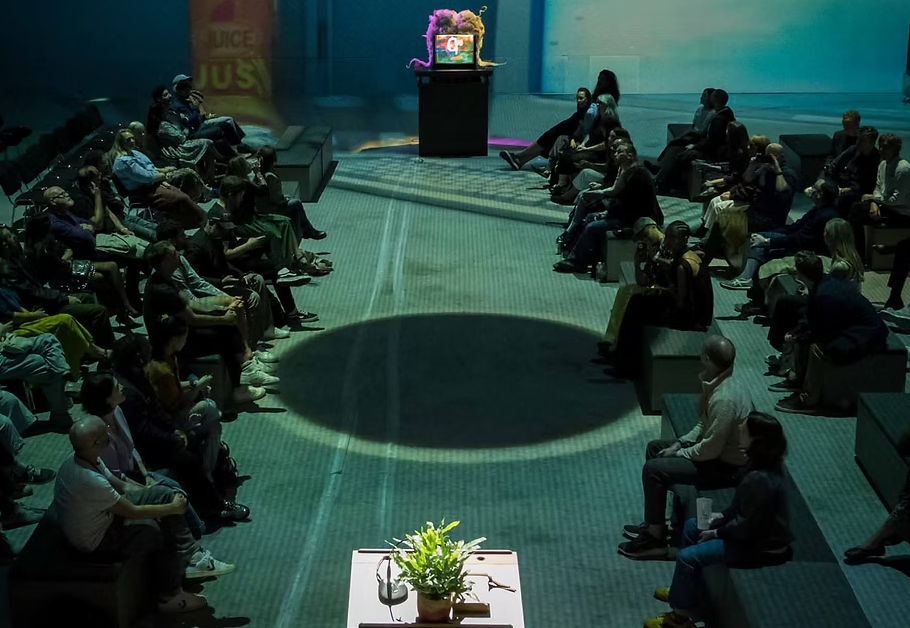
Lightroom's space does considerable work here. The eleven-metre-tall projected walls transform the venue into something that feels genuinely judicial, vast and slightly oppressive while remaining intimate enough for the audience's reactions to be visible and contagious. The proximity means energy moves around the room quickly, and the experience calibrates itself to the crowd with a responsiveness that feels remarkable in practice even when you understand the technology behind it. Small moments become significant: the pause before GAWD delivers a verdict on a piece of testimony, the ripple of laughter when a non-human witness makes a point that is uncomfortably difficult to argue with, the collective shift in the room when something unexpectedly sincere surfaces amid the absurdity.
One of the experience's greatest strengths is the way it holds comedy and genuine philosophical weight in balance without forcing either. The humour is never cheap; it grows from the situation and from the real, unscripted responses of real people defending a species with a fairly mixed record, which means the funny moments carry an edge that stays with you. The non-human witnesses including that talking fern and an outdated Alexa argue against humanity with a logic that is easy to dismiss and surprisingly hard to refute, which is where the experience finds its most interesting territory. The comedy helps make the dark topic tolerable; the dark topic stops the comedy from becoming merely silly.
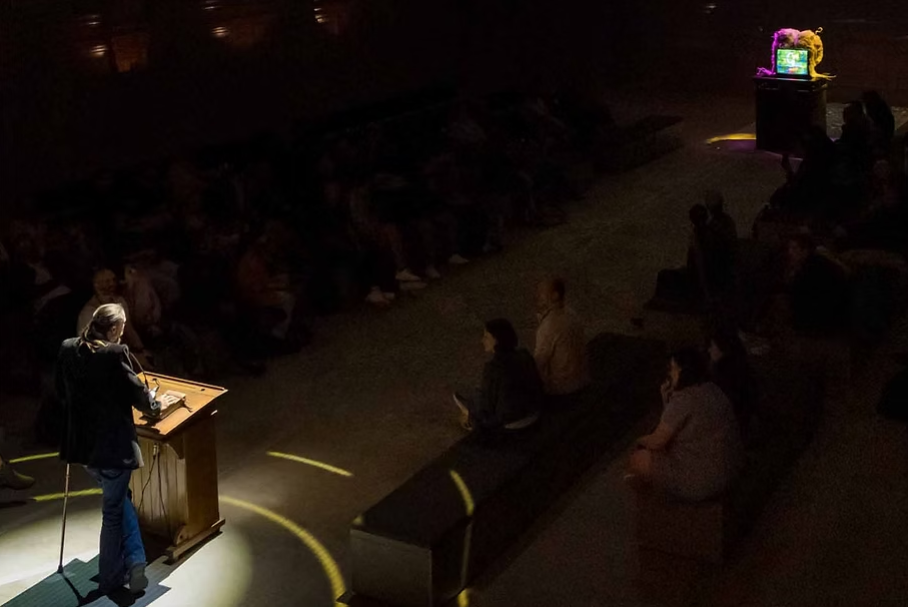
There are passages where the pace eases, and the experience allows the room to sit with what has just been said: A testimony that veered somewhere unexpectedly honest, a question from GAWD that nobody quite knows how to answer. These are among the most valuable moments in the hour. GAWD v. The People understands that the biggest questions facing humanity about AI, about accountability, about whether we have earned another chance cannot be resolved in sixty minutes, and it has the confidence not to pretend otherwise. What it offers instead is an hour of being genuinely, productively unsettled, in the company of strangers who are all in it together.

