

Does My Head Look Big in This? at The Cartoon Museum: Five Centuries of Flattery, Fury and the Art of the Gloriously Oversized Nose
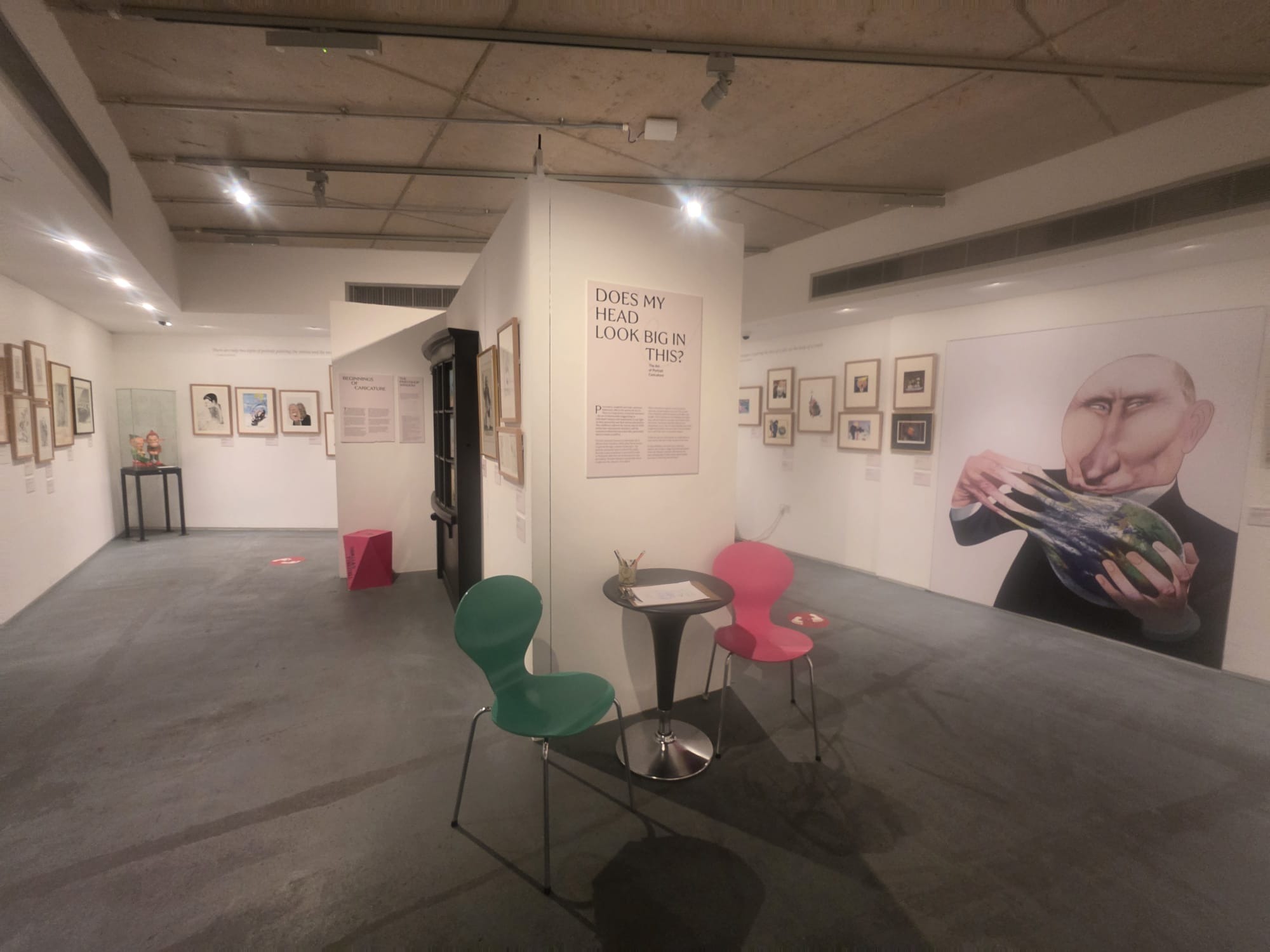
Does My Head Look Big in This? The Art of Portrait Caricature, currently on display at The Cartoon Museum on Wells Street in London's West End, is the kind of exhibition that reminds you why the art of the caricature, so easily dismissed as mere mockery or novelty, is in fact one of the most politically charged and technically demanding art forms ever developed. This generous, meticulously curated show traces portrait caricature from its origins in Renaissance Italy through its outrageous Golden Age in eighteenth-century England and into its vigorous popularity today. It is funny, sharp, frequently rude, and considerably more thought-provoking than its title, which is, of course, precisely the point.
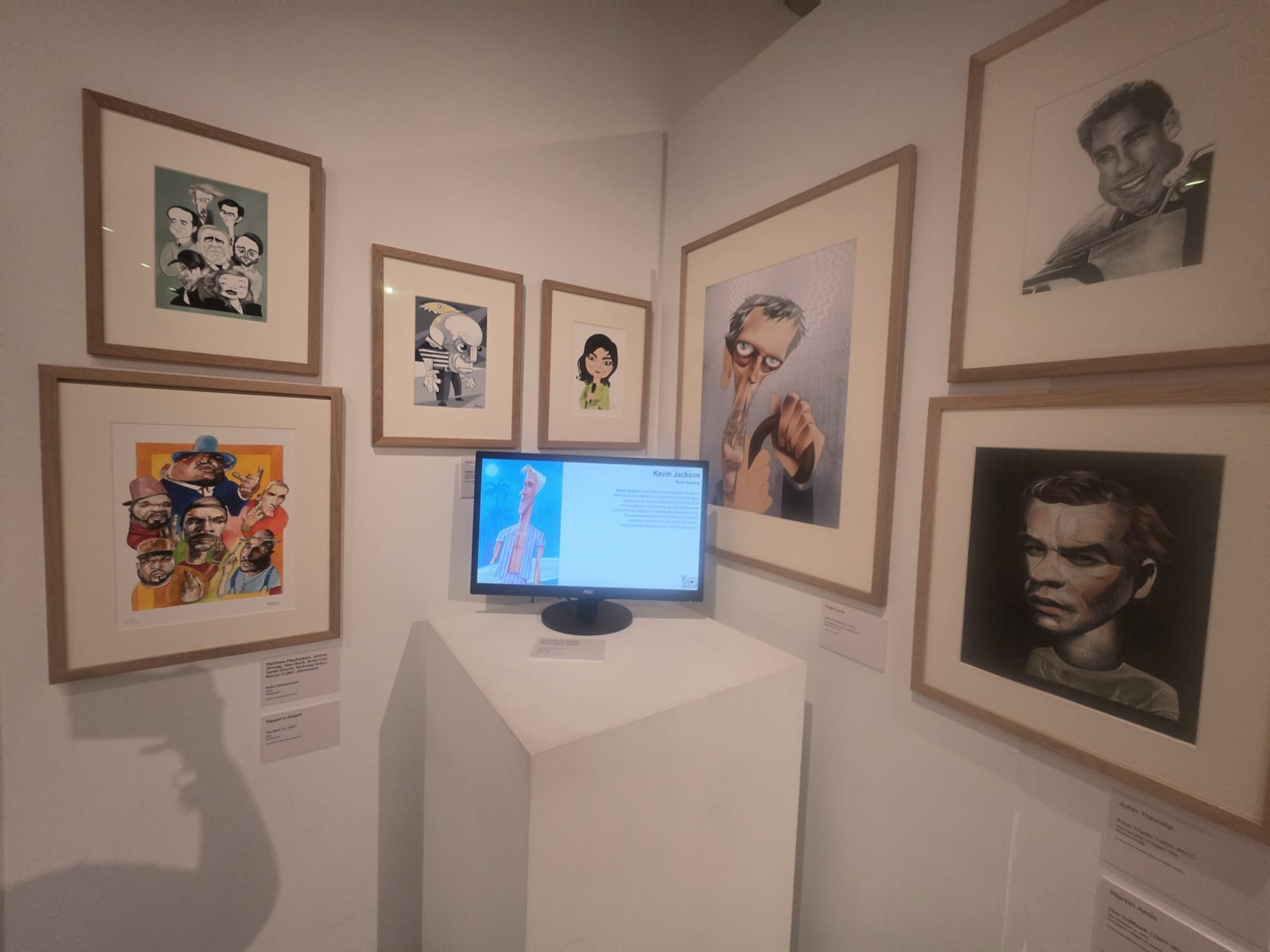
The exhibition establishes its argument from the very first wall. Provocative, insightful and rude, the caricaturist hilariously reflects the society we live in, who we choose to vote for, and the personalities we celebrate, and the works on display from the earliest section make it immediately clear that this has always been true. The caricature was never purely decorative; it was a weapon, a form of public accountability dressed up as entertainment, and the works gathered here carry that dual function with gleeful ease. A portrait that seems, at first glance, simply comic, an exaggerated jaw here, an improbable nose there, rewards a second look with something sharper: a comment on power, vanity, or the gap between public image and private reality. From the opening rooms onwards, the exhibition demonstrates a clear and confident understanding of how much can be said through distortion that cannot be said through straightforward representation.
What works especially well is the breadth and quality of the artists represented. The exhibition showcases centuries of great caricatures, including some of today's famous faces, with work by artists including Christopher Payne, Clete Shields, George G. Williams, Jason Seiler, Kage Nakanishi, Kev Jackson, Kosuke Miyagi, Maria Picasso-Piquer, Seul Ki Ahn, Steve Brodner and Zach Trenholm. Alongside these contemporary practitioners, the exhibition includes work by Gerald Scarfe, David Levine and André Carrilho names that span continents and generations and demonstrate that the impulse to exaggerate a powerful face into its essential truth is one of the most persistent in the history of visual art. Moving between these generations, the show makes the case not just for the history of caricature but for its continuity: the sense that each generation of artists is reaching for exactly the same thing as the last, with whatever tools their moment provides.
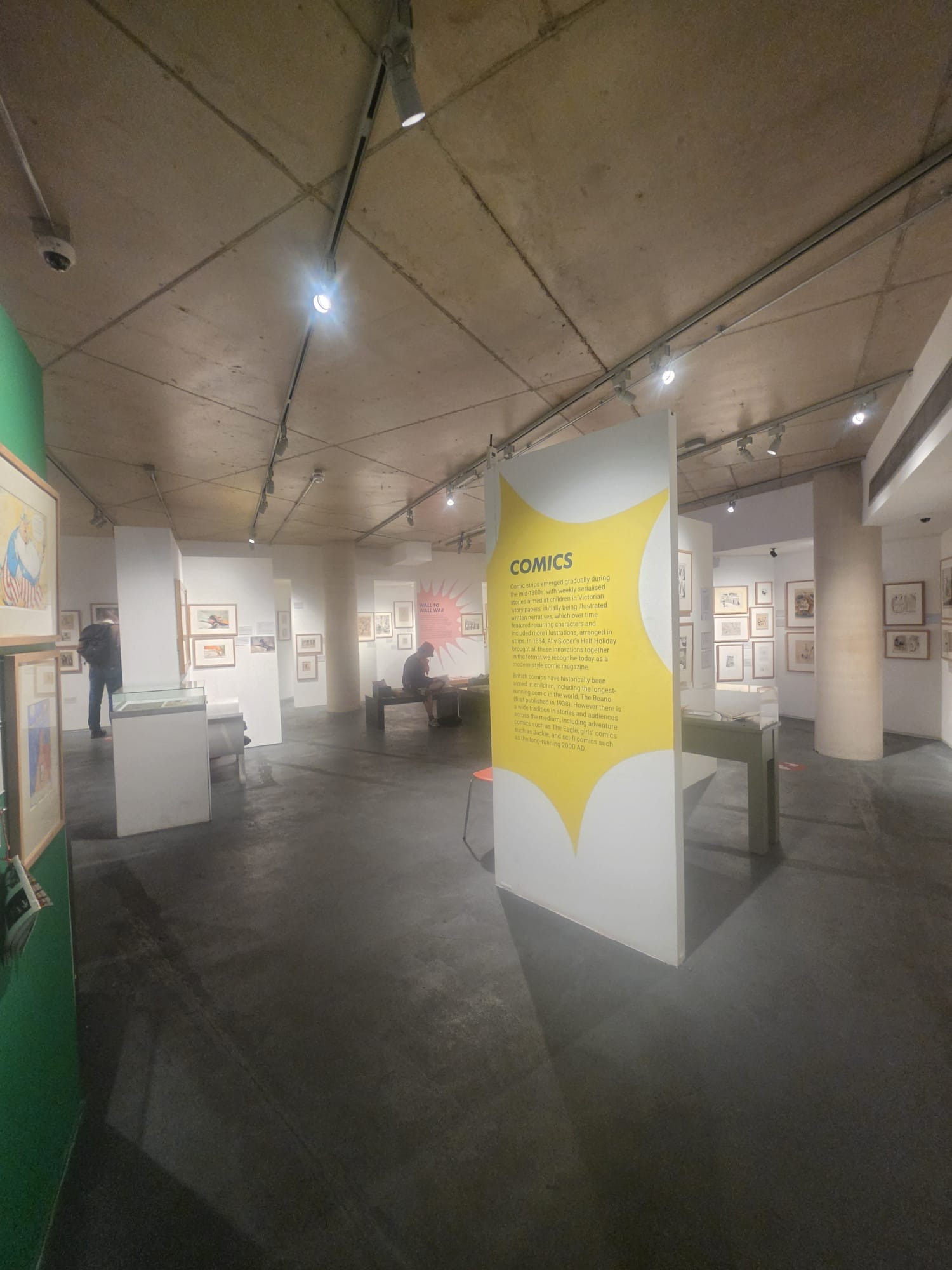
The curation rewards close attention. Works are hung with enough space to breathe and to invite comparison, and the progression through historical periods feels genuinely illuminating rather than merely chronological. The eighteenth-century English section is particularly rich, capturing a moment when caricature was simultaneously high art and popular entertainment, sold as prints, collected by aristocrats, feared by politicians and consumed eagerly by a public that had developed a sophisticated appetite for pointed visual commentary. Standing in front of these works and then turning to look at their contemporary equivalents is one of the exhibition's most enjoyable pleasures: the techniques have evolved, the targets have changed, but the fundamental transaction between artist and subject the negotiation between truth and exaggeration, between likeness and exposure remains entirely recognisable.
One of the exhibition's greatest strengths is the range of approaches it encompasses without ever losing its curatorial coherence. From the technically precise to the wildly gestural, from the affectionately comic to the genuinely vicious, the works on display make clear that caricature is not a single style but a disposition, a willingness to look at a face and ask not just what it looks like but what it reveals. The humour present throughout never feels gratuitous; it grows from observation and from the artist's engagement with their subject, which means that even the silliest moments carry an intelligence that rewards attention.
There are quieter corners of the exhibition where the pace naturally slows: smaller works that reward close inspection, portraits that require you to identify the subject before the joke becomes legible, pieces that are less immediately funny than they are genuinely unsettling in their accuracy. These are among the most valuable passages in the show. The Cartoon Museum has built an exhibition that understands caricature not as a lesser art form that occasionally produces something interesting but as a serious and sustained tradition of visual truth-telling, one that has consistently said things about power and celebrity and human vanity that more polite art forms could not or would not say.

